


Tobacco cultivation is a global problem that poses risks to human health, the environment, and contradicts sustainable development.
Ukraine has been fortunate to move away from dependence on tobacco cultivation: over the past decades, agricultural sector has shifted from growing tobacco to other safe and economically valuable crops, reducing occupational health risks and lowering environmental burdens. Currently, the main tobacco-growing areas in the world are concentrated in warm and humid regions with a high proportion of low-cost labor, including Zimbabwe, Malawi, China, India, and Brazil.
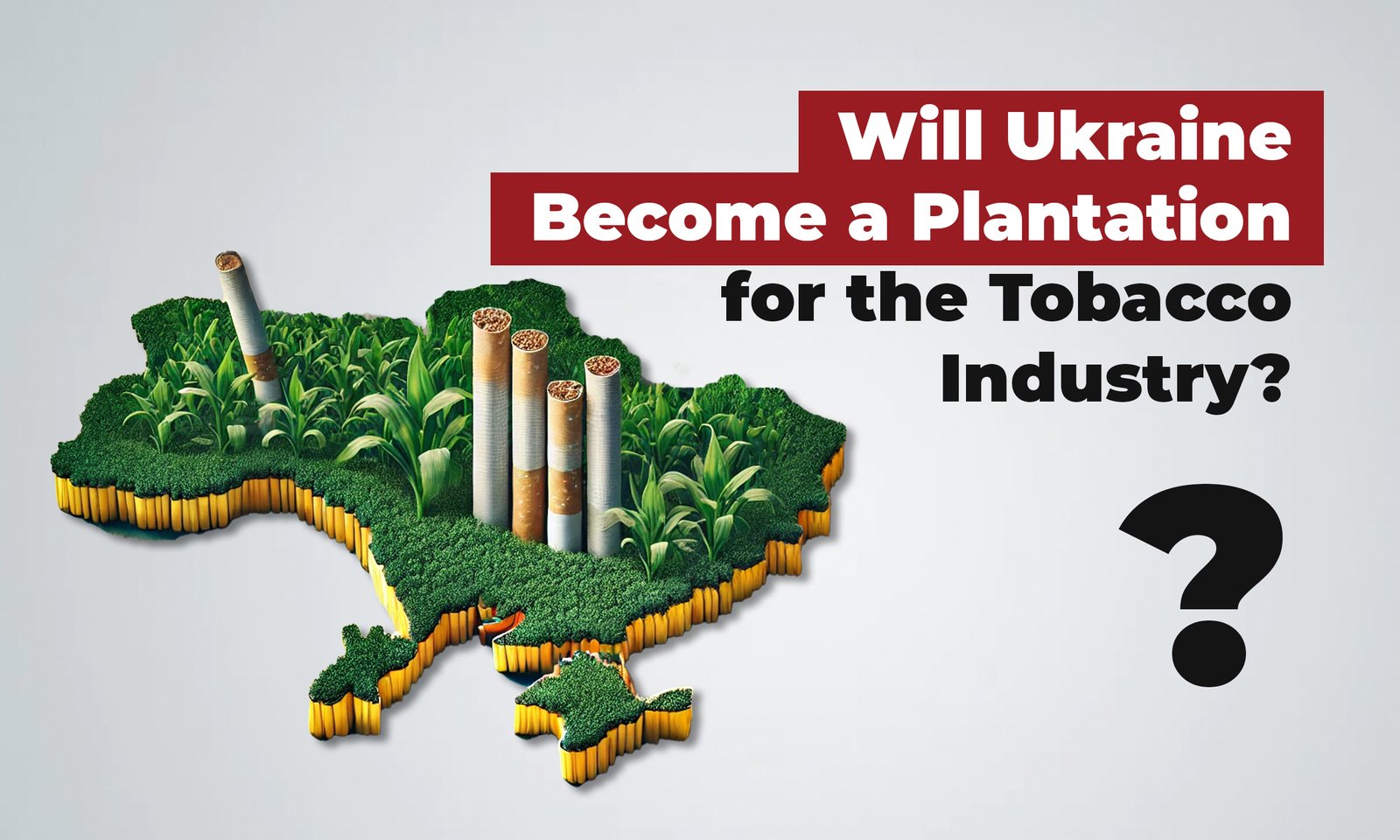
The promotion of ideas to revive tobacco cultivation follows a model classic to the tobacco industry of creating a “broad circle of stakeholders”, where, under the guise of supporting farmers, regional development, or employment, the commercial interests of tobacco product manufacturers are in fact being advanced. This strategy has been repeatedly documented in other countries and is regarded by the WHO as a form of interference by the tobacco industry in policymaking.
According to the State Statistics Service of Ukraine, as of 2024, volume (gross collection) of tobacco cultivation in Ukraine was 22.5 thousand hundredweight (2 250 tons). At the same time, the total sown area is only 1.1 thousand hectares (0.01% of the total area of technical crops in Ukraine).
However, at the end of 2024, legislative initiatives aimed at stimulating tobacco cultivation became more active in Ukraine, which may indicate the influence of the tobacco industry on the shaping of public policy, contrary to the principles of protecting public health.
In 2006, Ukraine ratified the WHO Framework Convention on Tobacco Control (FCTC), which establishes a set of obligations aimed at reducing the scale of tobacco production and consumption, as well as protecting public policy from interference by the tobacco industry. In particular:
Article 17 of the Convention calls on Parties to promote the development of economically viable alternatives for individuals engaged in tobacco growing and production;
Article 18 obliges Parties to give due consideration to environmental protection and public health when carrying out any activities related to the cultivation and production of tobacco products.
The importance of implementing the FCTC in Ukraine is also reinforced by Presidential Decree No. 722/2019, which includes task 3.a — to accelerate FCTC implementation across all areas of public policy. At the same time, promoting tobacco cultivation directly contradicts the Sustainable Development Goals, particularly Goals 3 (Good Health and Well-being), 8 (Decent Work and Economic Growth), 12 (Responsible Consumption and Production) and 15 (Ecosystem Conservation).
In Ukraine, over 100 000 people die prematurely each year from tobacco-related diseases. According to WHO, tobacco plantation workers suffer from nicotine poisoning (“green tobacco sickness”) as nicotine is absorbed through the skin during leaf harvesting. One in four farmers involved in tobacco cultivation experiences acute poisoning symptoms, and exposure to toxic substances affects their family members, including children. Resuming tobacco cultivation would increase the number of workers exposed to occupational hazards while exacerbating the tobacco epidemic through the creation of new economic dependencies for communities.
Additionally, tobacco cultivation is highly resource-intensive for the environment. According to WHO estimates, globally the tobacco industry destroys 600 million trees annually, occupies over 200,000 hectares of fertile land, and consumes over 22 billion tons of water. For Ukraine, these consequences pose a threat to food security and the sustainable development of the agricultural sector.
Expanding tobacco cultivation would require significant amounts of manual labor and displace crops of real economic value necessary for domestic food supply.
Between 2024 and 2025, a series of bills aimed at restoring and incentivizing tobacco cultivation in Ukraine were registered in the Verkhovna Rada.
In particular, on 15 August 2025, Member of Parliament Marian Zablotskyi – who prior to his parliamentary work headed the NGO “Ukrainian Society for Economic Freedoms” and received funding from the tobacco company Philip Morris International totaling USD 427,000 during 2017–2019 – registered Bill No. 13628. The bill proposed introducing quotas for the use of Ukrainian tobacco in the production of tobacco products, ranging from 2% in 2027 to 5% from 2029, thereby creating economic incentives for cultivating tobacco raw materials in Ukraine. During its consideration on 8 October 2025, the Bill was rejected by parliament.
It should be noted that Bill No. 13628 was neither the first nor the last attempt to stimulate tobacco cultivation in Ukraine. Throughout 2024-2025, legislative initiatives of a similar nature regularly appeared in parliament, proposing mandatory quotas for the use of Ukrainian tobacco raw materials in the production of tobacco products and the gradual increase of such quotas over several years. As of December 2025, new proposals had been submitted, despite Ukraine’s international obligations and the principles of protecting public health. It is also worth noting that, according to journalists, a working group was convened during the preparation of legislative changes, to which representatives of the tobacco industry were invited, while representatives of the expert civil society community were not included among the participants.
In the development of state policy in the field of preventing and reducing tobacco and nicotine use, Article 4 of the Law of Ukraine No. 2899-IV establishes the priority of public health policy over the financial, tax, and corporate interests of entities associated with the tobacco industry. This principle is reinforced by Article 5.3 of the WHO Framework Convention on Tobacco Control, which emphasizes the need to protect public health policy from the commercial and corporate influence of the tobacco industry.
Thus, attempts to stimulate tobacco cultivation create conditions for deepening Ukraine’s dependence on a raw-material economy linked to the tobacco industry – an economic model characteristic of low-income countries and associated with threats to human health and the environment – which contradicts the strategic objectives declared by the Government of Ukraine.
[1] https://applications.emro.who.int/docs/Fact_Sheet_TFI_2014_EN_15314.pdf
[2] http://tobaccocontrol.org.ua/uploads/resource/file/48/58fcede58328a.pdf
[3] https://ukrstat.gov.ua/operativ/operativ2021/sg/ovuzpsg/Arh_ovuzpsg_2025_u.html
[4] https://www.who.int/campaigns/world-no-tobacco-day/2023/top-50-tobacco-growing-countries
[5] https://exposetobacco.org/wp-content/uploads/Growers-Fact-Sheet.pdf
[8] https://www.ukrstat.gov.ua/operativ/operativ2022/sg/pvzu/arch_pvxu_reg.htm
[9] https://center-life.org/zolota-kosa-2024/
[10] https://zakon.rada.gov.ua/laws/show/897_001#Text
[11] https://zakon.rada.gov.ua/laws/show/722/2019#Text
[12] https://www.undp.org/uk/ukraine/tsili-staloho-rozvytku
[16] https://center-life.org/zolota-kosa-2021-2022/
[17] https://itd.rada.gov.ua/billinfo/Bills/Card/57078
[18] https://itd.rada.gov.ua/billinfo/Bills/Card/45324