


Ukraine has been a Party to the WHO Framework Convention on Tobacco Control for twenty years, yet it has still not ratified the Protocol to Eliminate Illicit Trade in Tobacco Products to the WHO FCTC — the key international instrument for combating the illicit trade in tobacco products. Despite the obvious advantages, Ukraine’s ratification of the Protocol has been stalled for many years. These delays cost the state billions of hryvnias annually and contribute to the growth of the shadow tobacco market, undermining economic security and negatively affecting public health.
This article examines the significance of the Protocol for Ukraine, the likely influence of the tobacco industry on the ratification process, and the consequences of prolonged inaction, which run counter to national interests and the objectives of public health policy.
The WHO Framework Convention on Tobacco Control (hereinafter referred to as the WHO FCTC) is the first binding international treaty in the field of health concluded under the auspices of the World Health Organisation. The Convention was adopted in 2003 and entered into force in 2005, introducing legal instruments to combat the global tobacco epidemic. As of 2025, 183 states are parties to the WHO FCTC, covering more than 90% of the world’s population. Among them is Ukraine, which ratified the Convention in 2006 in accordance with the Law of Ukraine “On Ratification of the World Health Organisation Framework Convention on Tobacco Control“. Over the past decade, the WHO FCTC has proven its effectiveness as an effective mechanism for protecting public health, contributing to a significant reduction in tobacco and nicotine consumption worldwide.
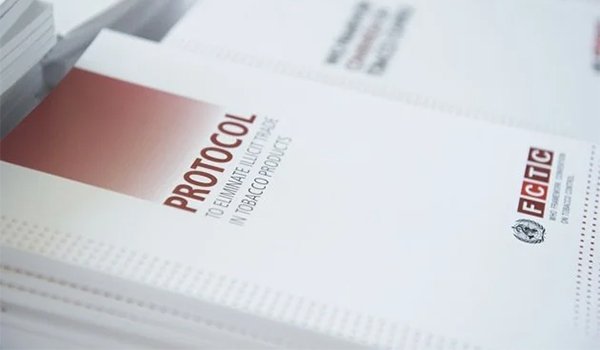
Within the framework of the implementation of the provisions of the WHO FCTC, in particular Article 15, the Protocol to Eliminate Illicit Trade in Tobacco Products (hereinafter referred to as the Protocol) was developed and adopted. It is the first additional international legal instrument to the WHO FCTC aimed at coordinating the actions of states and creating a system for preventing and controlling illicit trade in tobacco products. The Protocol entered into force in September 2018 — 90 days after ratification by the first 40 states — and currently has 71 Parties, demonstrating broad global support for the fight against illicit trade in tobacco products.
The Protocol aims to eliminate all forms of illicit trade in tobacco products. It provides for the establishment of a global system for tracking and controlling the movement of tobacco products, including national and regional tracking systems and a global information exchange point. Particular attention is paid to the control of Internet sales, duty-free trade, transit and operations in free economic zones, which are often used for shadow schemes. In addition, the Protocol defines responsibility for illegal activities in the trade of tobacco products and promotes international cooperation between Parties and government agencies, serving as a global tool to combat the illicit trade in tobacco.
The World Health Organisation notes that the illicit trade in tobacco products contributes to an increase in their consumption. Illegal cigarettes are usually cheaper and more accessible, making them attractive to various segments of the population, particularly young people. As a result, the spread of illegal products undermines countries’ efforts to control tobacco and reduce tobacco use.
The tobacco industry itself is often cited as the largest source of illicit trade: there is a body of evidence that manufacturers and intermediaries use semi-legal supply chains to facilitate the movement of tobacco products from low-tax areas to higher-tax markets. This allows them to maintain profits while increasing the availability of cheap tobacco products on the illegal market. According to various studies, the tobacco industry’s share in the supply of illegal products varies from country to country, but can reach 60-70% .
At the same time, while declaring its fight against the illegal trade in tobacco products, the tobacco industry avoids supporting the Protocol as a key international instrument to combat illicit trade and instead promotes its own solutions that are beneficial to it.
According to the results of a World Bank analysis presented in the study “Confronting Illicit Tobacco Trade implementation of the Protocol’s provisions faces challenges due to the tobacco industry’s active promotion of its own tracking and control systems, which do not meet the Protocol’s requirements. While the Protocol stipulates that control over the tobacco product tracking system should remain within the competence of governments, the tobacco industry has promoted the Codentify system in the European Union, which contradicts the Protocol and does not provide for adequate state control over the tracking of products that do not meet the requirements of Article 8.2 of the Protocol, which stipulates that the system must be controlled by a Party to the Protocol. Authorities must maintain distance from the tobacco industry, as industry-controlled systems can be opaque, subject to patent restrictions, and serve commercial interests rather than effectively combating illicit tobacco trade.
Despite the introduction of certain control measures in Ukraine, the scale of the shadow trade in tobacco products remains significant. According to Euromonitor International, in 2024, the total cigarette market in Ukraine — including both legal and illicit products — amounted to approximately 38.3 billion sticks, of which 6.3 billion were illicit cigarettes, representing about 16.4% of the overall market.
At the same time, the tobacco industry tends to inflate estimates of illicit trade in order to discredit tobacco-control measures. Systematic research confirms that such practices are aimed at undermining effective policies designed to reduce tobacco consumption. In contrast, independent studies show that the scale of illicit trade is significantly lower than the industry claims, as demonstrated by the data presented below.
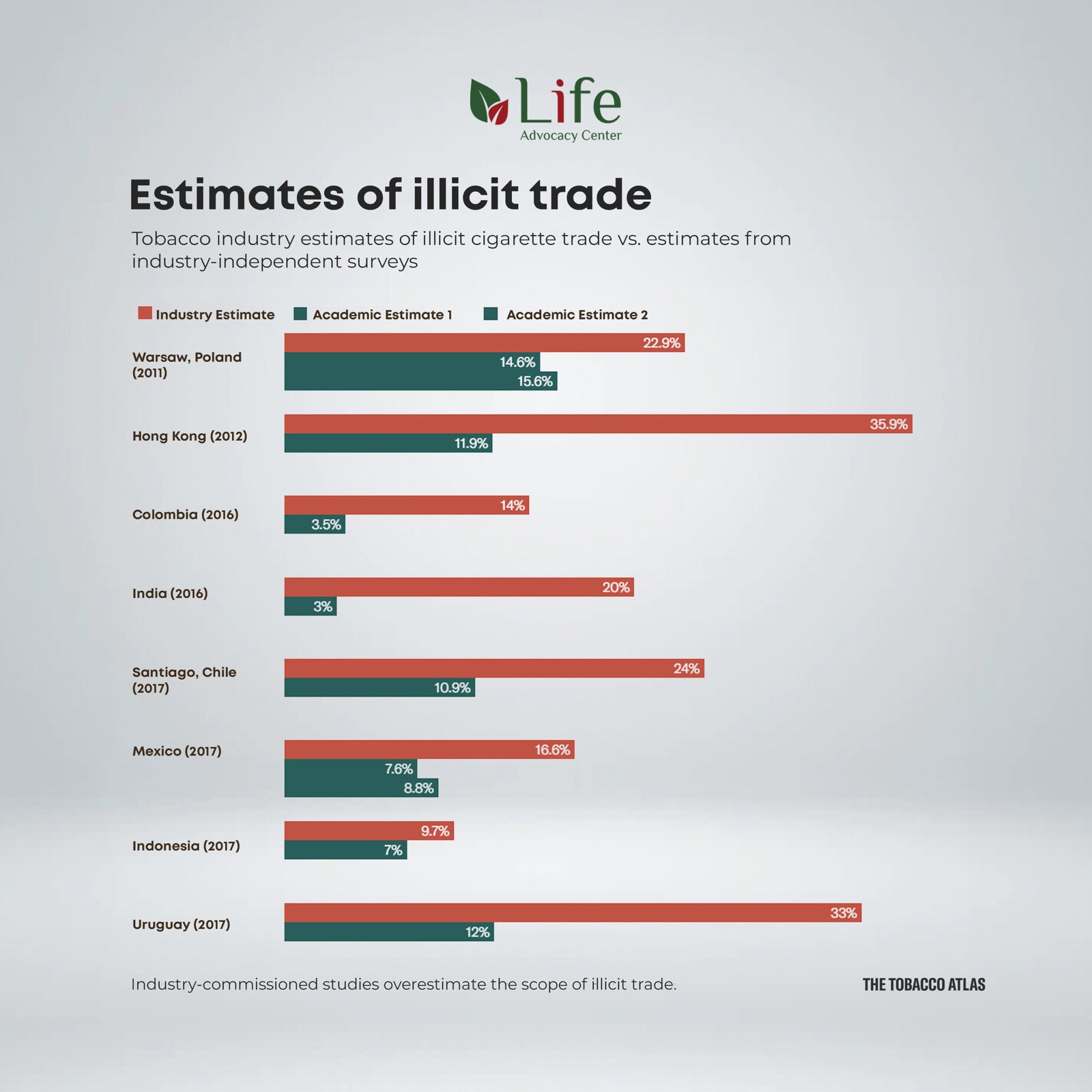
In Ukraine, the Government does not conduct its own research on the scale of illicit trade in tobacco products. Existing estimates mostly come from sources financed by the tobacco industry, and therefore theirresults may not fully reflect the actual situation.
The main drivers of illicit trade remain: a significant excise tax gap between Ukraine and EU countries, which stimulates the smuggling of tobacco products abroad; shortcomings in the system for monitoring the production and circulation of tobacco products; and corruption risks within law-enforcement and regulatory bodies.
Ukraine is often viewed as a transit country for smuggling; however, ratifying the Protocol would allow the state to demonstrate clear intent to combat illicit trade and to implement effective control measures.
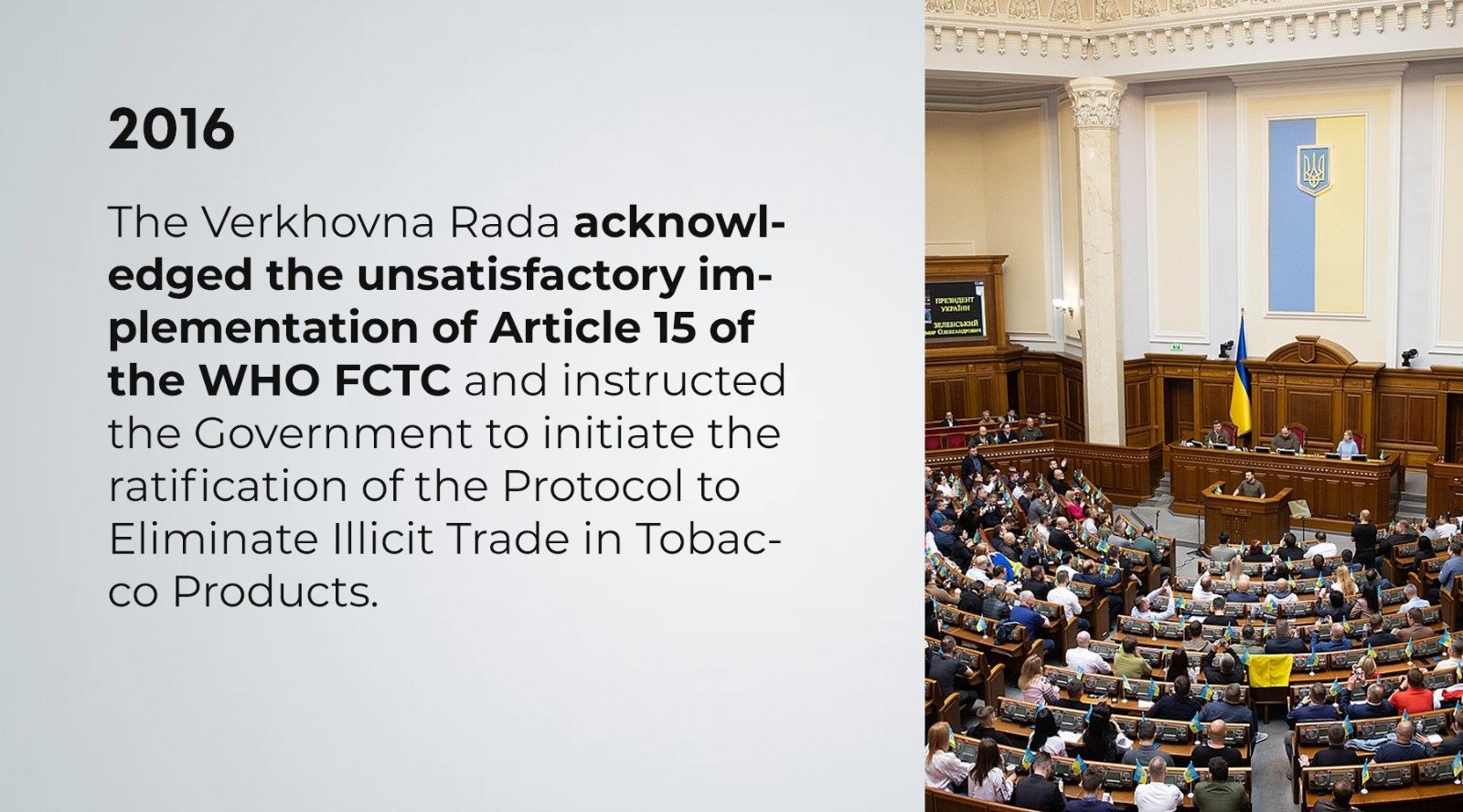
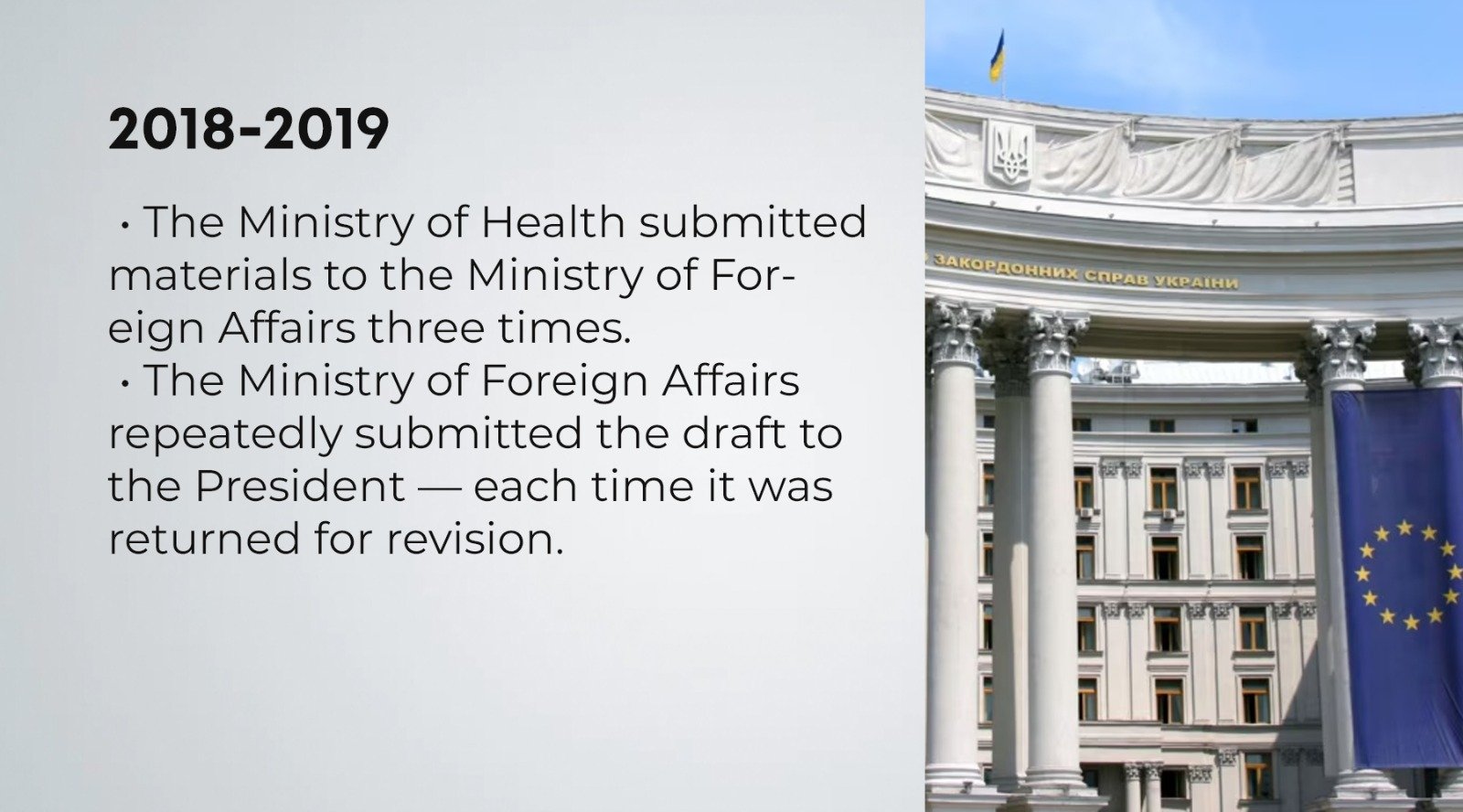
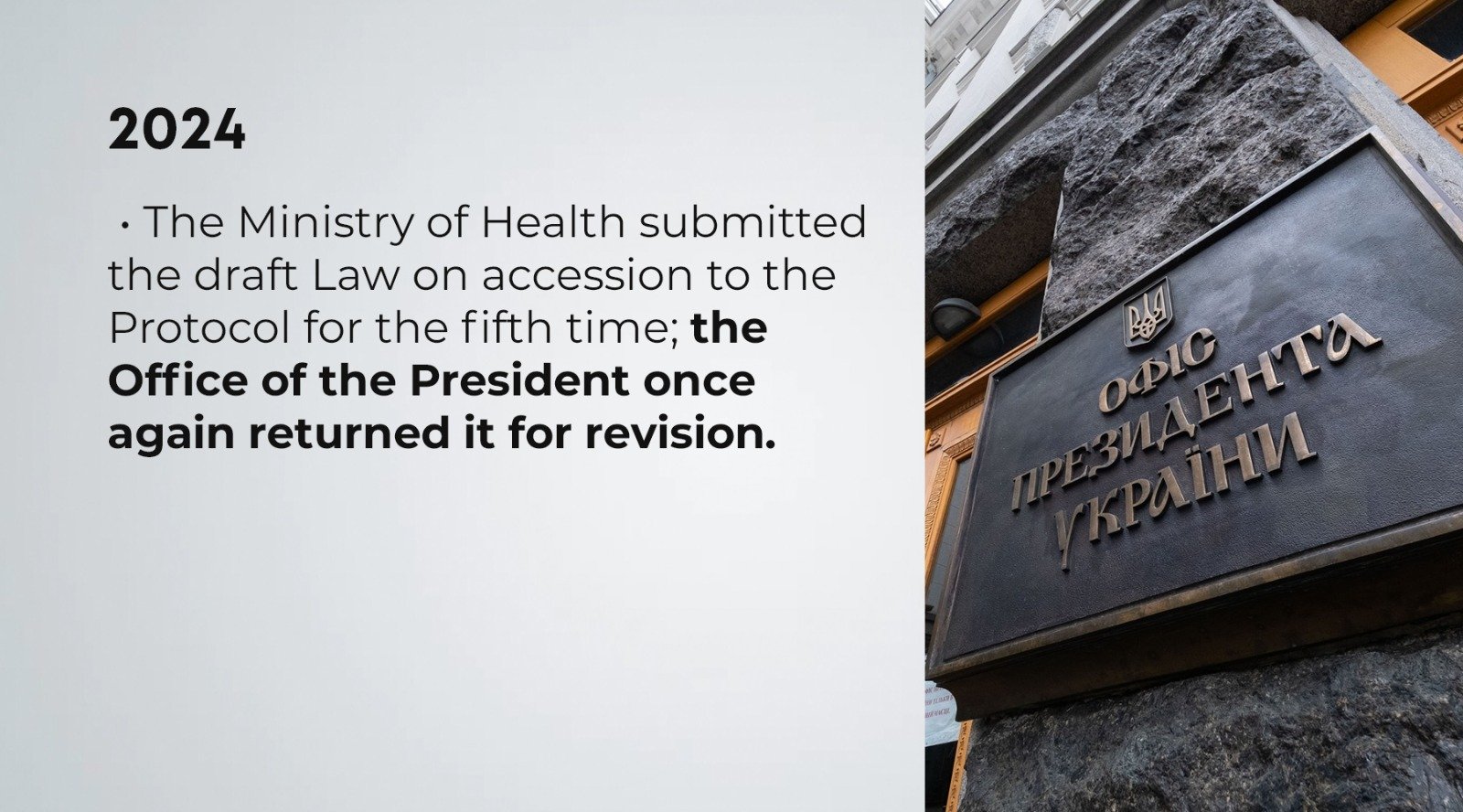
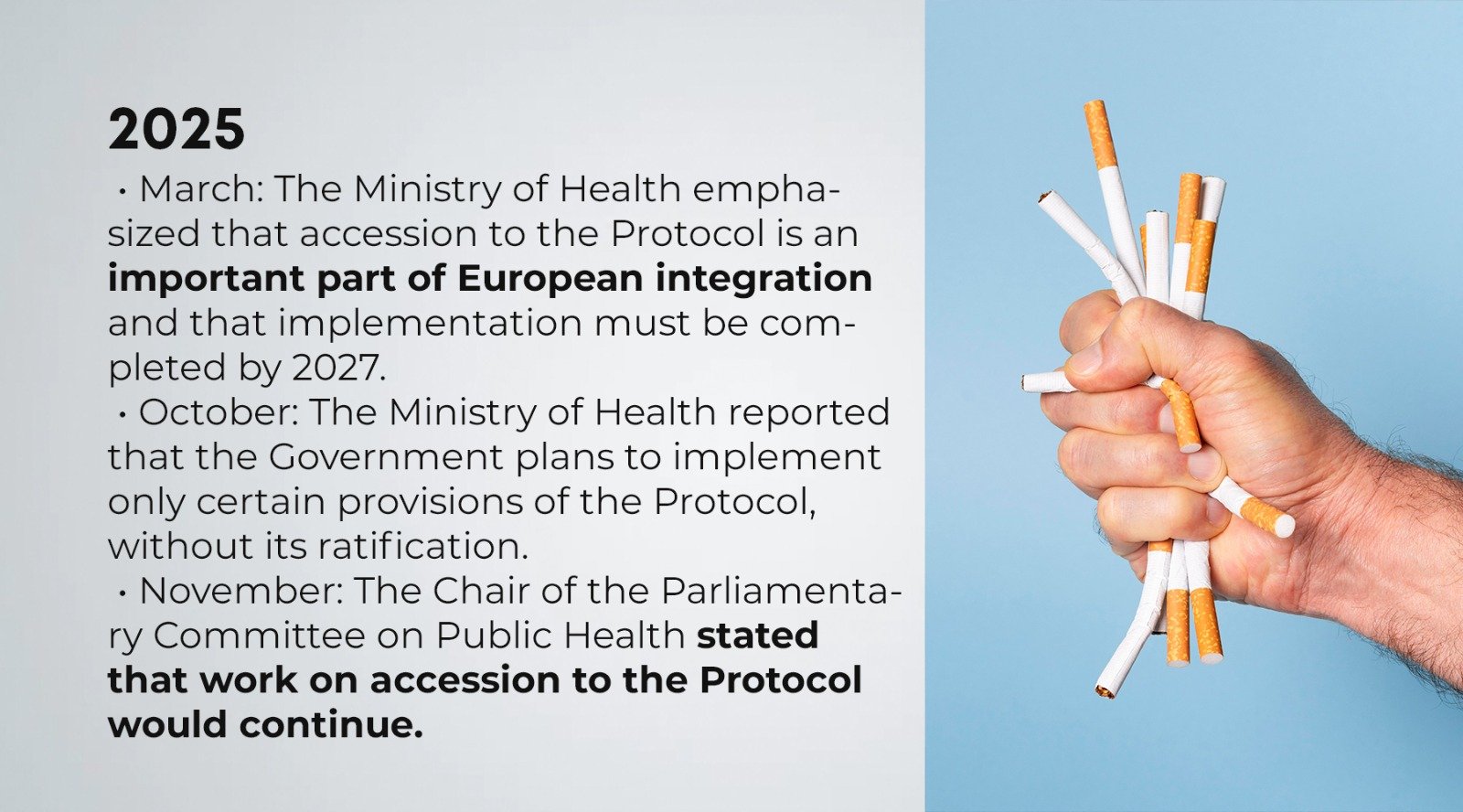
The issue of Ukraine’s accession to the Protocol on the Elimination of Illicit Trade in Tobacco Products has been raised repeatedly at the state level and is actively supported by the public. At the same time, despite the preparation of draft laws by the Ministry of Health, they have not been submitted to the Verkhovna Rada for nearly ten years, which is probably due to opposition from the tobacco industry.
In accordance with Article 9 of the Law of Ukraine “On International Treaties of Ukraine”, the ratification of international treaties takes place through the adoption by the Verkhovna Rada of a law on ratification, an integral part of which is the text of the treaty itself. Proposals for ratification are prepared by the Ministry of Foreign Affairs in conjunction with the responsible central executive authorities and submitted to the President of Ukraine. The President or the Government then decides to submit the draft law to the Verkhovna Rada as a legislative initiative. In the case of the Protocol on the Elimination of Illicit Trade in Tobacco Products, the Ministry of Health of Ukraine is responsible for drafting the relevant bill.
At the same time, ratification of the Protocol is not a matter of political expediency, but an international obligation of Ukraine. Thus, Article 352 of the Association Agreement between Ukraine and the EU provides for cooperation in the fight against illicit trade in excise goods. The European Union itself is a party to the Protocol, 20 EU Member States have ratified it, and 15 are signatories.
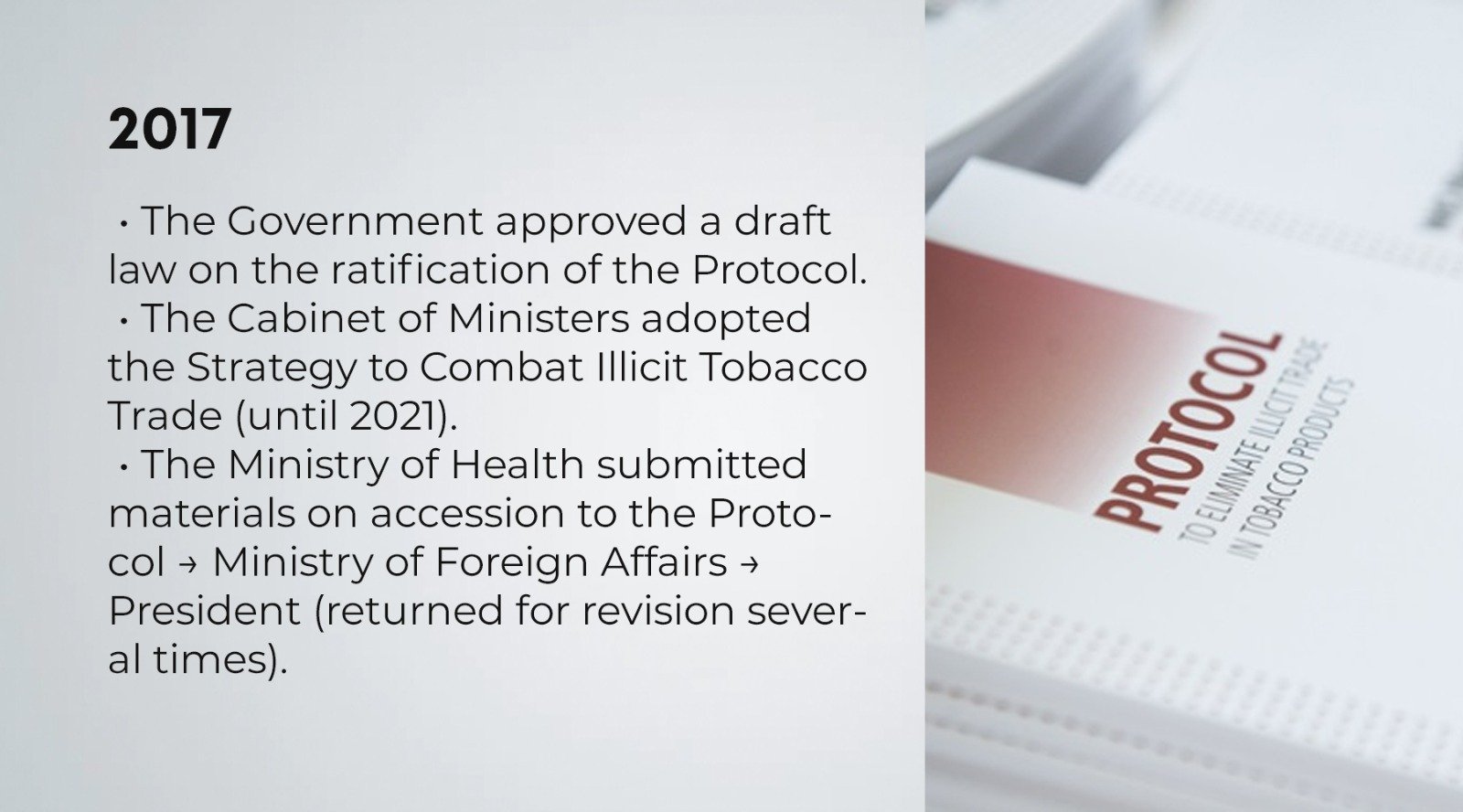
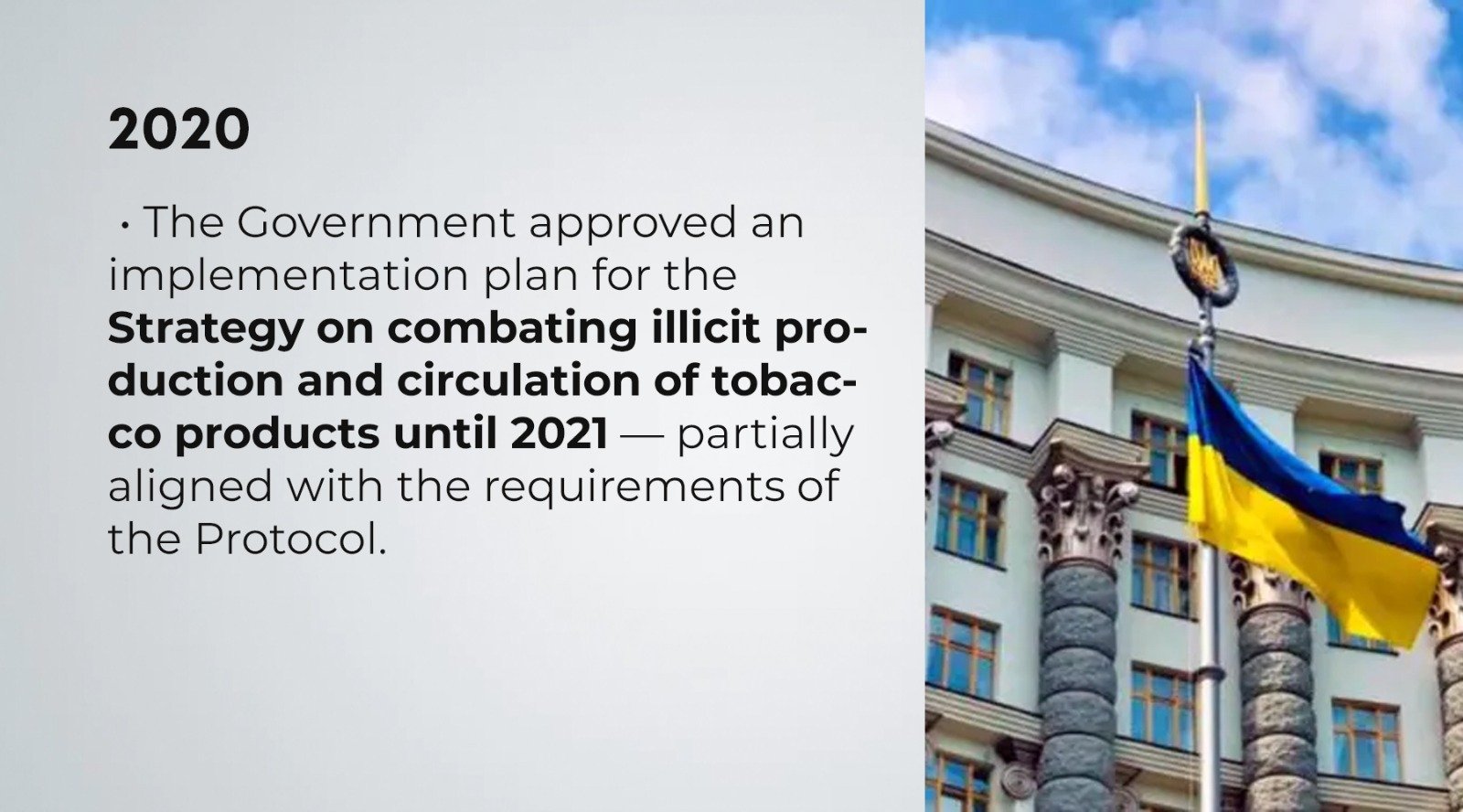
Separately, the Ministry of Health highlights that in order to ratify the Protocol, it is necessary to simultaneously submit draft laws necessary for its implementation, in particular regarding the strengthening of licensing, control over the circulation of tobacco products, and requirements for the storage and transportation of products. At the same time, public health experts emphasise that ratification of the Protocol does not require prior adoption of all relevant legislative amendments, as the document is of a framework nature. Its provisions are implemented gradually, as was the case with the WHO Framework Convention on Tobacco Control. Most of the provisions of the current legislation of Ukraine already partially comply with the requirements of the Protocol, and for key provisions, such as the track and trace system, a transition period of five years is provided.
In accordance with Article 9 of the Law of Ukraine “On International Treaties of Ukraine”, the ratification of international treaties takes place through the adoption by the Verkhovna Rada of a law on ratification, an integral part of which is the text of the treaty itself. Proposals for ratification are prepared by the Ministry of Foreign Affairs in conjunction with the responsible central executive authorities and submitted to the President of Ukraine. The President or the Government then decides to submit the draft law to the Verkhovna Rada as a legislative initiative. In the case of the Protocol on the Elimination of Illicit Trade in Tobacco Products, the Ministry of Health of Ukraine is responsible for drafting the relevant bill.
At the same time, ratification of the Protocol is not a matter of political expediency, but an international obligation of Ukraine. Thus, Article 352 of the Association Agreement between Ukraine and the EU provides for cooperation in the fight against illicit trade in excise goods. The European Union itself is a party to the Protocol, 20 EU Member States have ratified it, and 15 are signatories.
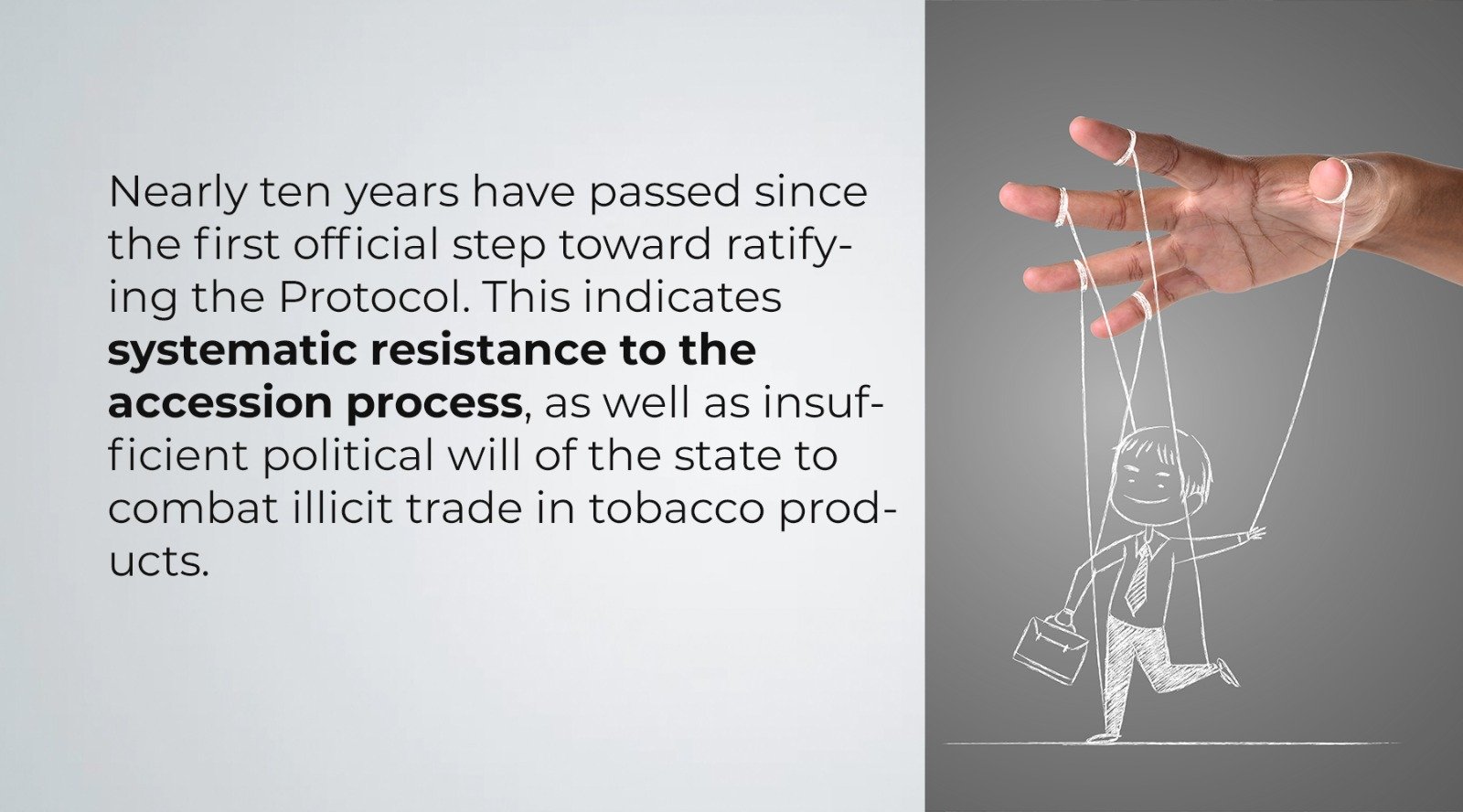
Thus, nearly ten years have passed since the first official step toward ratifying the Protocol, which indicates the presence of systemic resistance to Ukraine’s accession to it as an international treaty, as well as insufficient political will on the part of the state in combating the illicit trade in tobacco products.
Without political will at the highest level, efforts to combat illicit tobacco trade will remain ineffective, and annual delays in ratifying the Protocol cause significant harm to the health of Ukrainians.
Article 5.3 of the WHO Framework Convention on Tobacco Control and Article 4 of the Law of Ukraine No.2899-IV oblige that health policy be prioritized over financial, tax, and corporate interests of entities engaged in the tobacco industry. Failure to implement these provisions creates risks of tobacco industry interference in decision-making processes, undermines the effectiveness of state measures, threatens Ukraine’s EU integration trajectory, and diminishes the country’s capacity to combat illicit tobacco trade.
Ratification of the Protocol holds strategic significance for Ukraine — both in overcoming illicit tobacco trade and protecting public health, as well as in aligning national legislation with EU acquis standards. Such a decision would strengthen the state’s capacity to control tobacco products, ensure transparency and independence in decision-making, and provide a basis for effective product tracking and tracing. Utilizing the tools of the Protocol will contribute to increased budget revenues, the development of human capital, and enhanced international trust in Ukraine.
[1] https://zakon.rada.gov.ua/laws/show/897_001#Text
[2] https://treaties.un.org/pages/ViewDetails.aspx?src=TREATY&mtdsg_no=IX-4&chapter=9&clang=_en
[3] https://zakon.rada.gov.ua/laws/show/3534-15#Text
[4] https://fctc.who.int/protocol
[7] https://tobaccocontrol.bmj.com/content/28/2/127
[9] https://www.tobaccotactics.org/article/codentify/
[10] https://www.euromonitor.com/tobacco-in-ukraine/report
[11] https://tobaccoatlas.org/challenges/illicit-trade/
[13] https://publicintegrity.org/health/ukraines-lost-cigarettes-flood-europe/
[14] https://www.tobaccotactics.org/article/ukraine-country-profile/?utm_source=chatgpt.com
[15] https://zakon.rada.gov.ua/laws/show/984_011
[16] https://zakon.rada.gov.ua/laws/show/1087-VIII#Text
[17] https://www.kmu.gov.ua/news/249781430
[18] https://zakon.rada.gov.ua/laws/show/570-2017-%D1%80#Text
[19] https://center-life.org/wp-content/uploads/2019/03/4a.pdf
[20] https://drive.google.com/file/d/1Mqze23vXP42LmSQIHu___ib3hEFqxnsw/view