Cigarette display
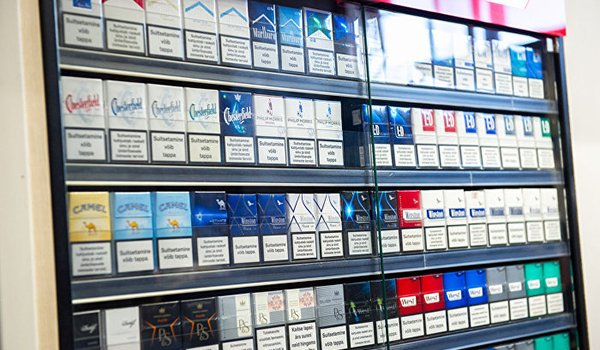
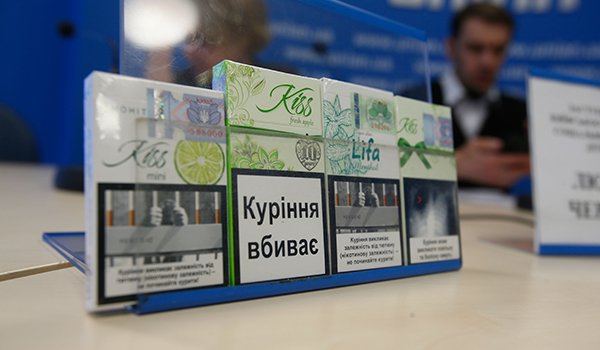
In this article 01. Cigarette displays as an advertising tool for sales promotion 02. History of legal regulation of cigarette displays in Ukraine 03. A legal loophole in regulating the ban on cigarette display 04. The draft law №4030a: Direct ban on the cigarette display 05. A cause of failure to vote for the draft law №4030a: Tactics of the tobacco industry interference 06. Links Share In this article 01. Cigarette displays as an advertising tool for sales promotion 02. History of legal regulation of cigarette displays in Ukraine 03. A legal loophole in regulating the ban on cigarette display 04. The draft law №4030a: Direct ban on the cigarette display 05. A cause of failure to vote for the draft law №4030a: Tactics of the tobacco industry interference 06. Links Share Cigarette display is the decoration of shop windows, areas near cash registers and special shelves in supermarkets by placing cigarettes against a bright background in frames, cases and panels. At the same time, bright design solutions, lightening and accessories with tobacco brands are used. The picture is complemented by the fact that the design of cigarette packs has also non-standard approaches to making their appearance better and more interesting[1]. Cigarette displays as an advertising tool for sales promotion Cigarette displaying as an advertising tool has become popular after the monopoly distribution company “Megapolis” (renamed as TEDIS Ukraine in 2016) was set up in 2011[2]. It is significant that “Megapolis” was founded by the structures of a Russian billionaire Igor Kesaev, who owns a Russian enterprise that produces weapons for the Russian Armed Forces. Nowadays, I. Kesaev is not officially a beneficiary or founder of TEDIS Ukraine, but the “Ukrayinska Pravda” journalists have found evidence that the company is still associated with him[3]. The need for a legislative ban on the cigarette display as a form of sales promotion is caused by principles of public policy on tobacco use prevention and Ukraine’s international obligations, namely those related to the 2016 WHO Framework Convention on Tobacco Control (FCTC)[4]. According to Article 13, Ukraine, as a Party to the Convention, has undertaken a comprehensive ban of all tobacco promotion. Furthermore, paragraph 12, the Article 13 of Guidelines explicitly states that even display of tobacco products at points of sale in itself constitutes advertising and promotion, and paragraph 13 requires a total ban on any display and the visibility of tobacco products at points of sale[5]. The deadline for implementation of these norms in the national legislation of Ukraine expired on September 4, 2011. In this case, delaying the implementation of the display ban essentially creates a preferential marketing regime for the tobacco industry, which also violates Article 5.3 of the FCTC[6]. All-Ukrainian monitoring 2013[7]–2014[8] conducted by the Coalition for Tobacco Free Ukraine showed that the following forms of cigarette displays are most commonly used at points of sale: Cigarette displays take up a large part – mostly half – of windows; Packs are placed in a special frame or display; Separate packs are backlit; Packs are placed against special background drawings; Cigarette displays are located at the most favorable points of shop windows: at consumers eye level, above the cash register, to the right of the kiosk sales window; Using enlarged layouts of packs; Bright price stickers, trade accessories with tobacco brands, cash trays; Price labels are placed directly on packs and cover warnings. Therefore, cigarettes are placed to be immediately visible to potential buyers who are just entering the store or passing near the kiosk. Moreover, cigarettes are often placed near candy and/or toys. According to the Global Adult Tobacco Survey in Ukraine (GATS 2017), 72% of Ukrainians consider such cigarette displays as a form of advertising[9]. According to a study in 2016, children aged 7-10 also consider cigarette displays as advertising and smoking promotion[10]. A global survey of young people on tobacco use in Ukraine among young people aged 13-15 (GYTS 2017) found that over 60% of young people noticed any tobacco advertising or promotion at points of sale[11]. A recent UNICEF survey in the fall of 2018 found similar data: 60.4% of young people saw cigarette advertising, 56.8% of them noticed it in kiosks, 48.9% saw it in supermarkets near cash registers and only 25.5%, on the Internet[12]. In 2015, there were over 90,000 points of cigarette sales in Ukraine. According to monitoring carried out a year earlier, in 2014, at least 77% of points of sale use special equipment[13]. Most often, the points of sale are located near schools[14], universities and bus-stops. Experts on tobacco control say that cigarette displays are primarily aimed at children, young people and those who quitted or are trying to quit[15]. These findings are supported by a study of the Johns Hopkins Bloomberg School of Public Health, which was carried out in 2016 in cooperation with the NGO Advocacy Center “Life”[16]. The psychological mechanism of the display is that placing cigarettes at children eye level, along with popular youth products such as sweets or magazines, creates social tolerance for smoking, and the use of bright design solutions leads young people to the idea that smoking is not only acceptable but also fashionable. The mechanism of the display works as a reminder for people intending to quit. At the same time, tobacco companies regularly update visual components of the shop window, so that people do not get used to it and constantly pay attention to new bright visual effects. Therefore, a special display of cigarettes provokes spontaneous purchases and influences the final choice of the buyer. Thus, children who see cigarettes in bright shop windows are 64% more likely to start smoking[17], and 38% of smokers who try to quit smoking agree that the presence of tobacco products in shop windows causes cravings for smoking[18]. According to a survey conducted by the Kyiv School of Economics in 2016, adolescents are almost daily trying to buy cigarettes in 70% of Kyiv kiosks[19].According to the “Ekonomichna Pravda (Economic Truth)” online media outlet, the fact
Forms of Unnecessary Interaction
In this article 01. The government accommodates requests from the tobacco industry for a longer time frame for implementation or postponement of tobacco control law. (e.g. 180 days is common for PHW, Tax increase can be implemented within 1 month) (Rec 7.1) 02. The government gives privileges, incentives, exemptions or benefits to the tobacco industry (Rec 7.3) 03. Links Share In this article 01. The government accommodates requests from the tobacco industry for a longer time frame for implementation or postponement of tobacco control law. (e.g. 180 days is common for PHW, Tax increase can be implemented within 1 month) (Rec 7.1) 02. The government gives privileges, incentives, exemptions or benefits to the tobacco industry (Rec 7.3) 03. Links Share The government accommodates requests from the tobacco industry for a longer time frame for implementation or postponement of tobacco control law. (e.g. 180 days is common for PHW, Tax increase can be implemented within 1 month) (Rec 7.1) According to the Law since 2016 representatives of the tobacco companies that produced tobacco products and representative of association of tobacco producers are participating in the process of destroying illicit tobacco. State Fiscal Service and other responsible authorities together with representatives of tobacco companies ensure that illicit and counterfeit tobacco products are destroyed (burned)[1]. The fact that in 2018 State Fiscal Service signed a Memorandum of Understanding with “Ukrtiutiun” Ukrainian Association of Tobacco Producers (unites PMI, BAT, JTI, and Imperial Tobacco) shows that the Government accepts support from the tobacco industry to tackle illegal trade and the illegal movement of tobacco products and equipment, as well as solving other issues aimed at protecting the rights, freedoms and legitimate interests of individuals, business entities, and the interests of the state[2]. During two meetings[3] in 2018 between State Fiscal Service and “Ukrtiutiun” Ukrainian Association of Tobacco Producers questions related to countering illicit trade. Therefore, Government accepts ideas, proposals, recommendations from the tobacco industry. The government gives privileges, incentives, exemptions or benefits to the tobacco industry (Rec 7.3) In 2018 State Fiscal Service signed a Memorandum of Understanding with “Ukrtiutiun” Ukrainian Association of Tobacco Producers (unites PMI, BAT, JTI, and Imperial Tobacco). The memorandum defines actions aimed at counteracting illegal trade and the illegal movement of tobacco products and equipment, as well as solving other issues aimed at protecting the rights, freedoms and legitimate interests of individuals, business entities, and the interests of the state[4]. [1] Law on recording, storage, evaluation and confiscated other property transferred to state ownership and disposition https://zakon.rada.gov.ua/laws/show/1340-98-%D0%BF?fbclid=IwAR2bK9ILulDofAwA7exmnbb_3UxiGvU2X-qit35Gjhy7h9SB7FeDirhmKq8. April 14 2019. [2] THE UKRAINIAN STATE FISCAL SERVICE AND THE UKRTIUTIUN UKRAINIAN ASSOCIATION OF TOBACCO PRODUCERS HAVE SIGNED A MEMORANDUM OF COOPERATION TO COMBAT THE ILLEGAL TRADE AND MOVEMENT OF TOBACCO PRODUCTS IN UKRAINE. SFS. http://sfs.gov.ua/media-tsentr/novini/331434.html. April 14 2019. [3] Discussion the introduction of an automated control system for the circulation of tobacco products. State Fiscal Service. http://sfs.gov.ua/media-tsentr/novini/359674.html. May 2 2019. Discussion of the introduction of an electronic system for monitoring the production of tobacco products. State Fiscal Service. http://sfs.gov.ua/media-tsentr/novini/372067.html. May 2 2019. [4] THE UKRAINIAN STATE FISCAL SERVICE AND THE UKRTIUTIUN UKRAINIAN ASSOCIATION OF TOBACCO PRODUCERS HAVE SIGNED A MEMORANDUM OF COOPERATION TO COMBAT THE ILLEGAL TRADE AND MOVEMENT OF TOBACCO PRODUCTS IN UKRAINE. SFS. http://sfs.gov.ua/media-tsentr/novini/331434.html. April 14 2019.
Transparency
In this article 01. The government does not publicly disclose meetings/ interactions with the tobacco industry in cases where such interactions are strictly necessary for regulation. (Rec 2.2) 02. The government requires rules for the disclosure or registration of tobacco industry entities, affiliated organizations, and individuals acting on their behalf including lobbyists. 03. Links Share In this article 01. The government does not publicly disclose meetings/ interactions with the tobacco industry in cases where such interactions are strictly necessary for regulation. (Rec 2.2) 02. The government requires rules for the disclosure or registration of tobacco industry entities, affiliated organizations, and individuals acting on their behalf including lobbyists. 03. Links Share The government does not publicly disclose meetings/ interactions with the tobacco industry in cases where such interactions are strictly necessary for regulation. (Rec 2.2) The Law does not require the Government to publicly disclose meetings/ interactions with the tobacco industry. List of the meetings that were revealed after the search. Meeting of the President of Ukraine with business in Washington. Representatives of the tobacco industry were present at that meeting and raised attention of the President Petro Poroshenko to the litigation between State Fiscal Service and PMI Ukraine and the concerns of PMI Ukraine regarding unlawful actions of the State Fiscal Service towards the company. This is the only information publicly available about that meeting is from interview with PMI Ukraine representative Natalia Bondarenko[1]. Due to the fact that we do not know the exact day of the meeting we can’t confirm if this meeting was reported at the website of the President of Ukraine. There is one meeting that is matching a time frame. It’s listed at the news section of the website of the President as the meeting with the business representatives. Although there is no mention that the representatives of the tobacco industry used this meeting to draw attention of the President to the issue of the litigation between State Fiscal Service and PMI Ukraine[2]. State Fiscal Service met with “Ukrtiutiun” Ukrainian Association of Tobacco Manufacturers to discuss new electronic excise stamps that for tobacco products – the system that supposed to overcome illicit trade of tobacco products and should be launched soon in Ukraine[3]. In 2017 Victor Kovalenko, the first deputy chairman of the Kharkiv Regional Council, took part in a meeting with Philip Morris Ukraine management. They discussed ways to intensify cooperation, as well as opportunities for conducting new projects. According to Deputy Director General of Philip Morris Ukraine Ihor Krushko, between the regional authorities and the company there are “many examples of successful cooperation, the company is working on creating jobs and attracting investments to the Kharkiv Region. “He noted that the company in the Kharkiv region is among the most efficient enterprises, since it actively works for export.”[4] In 2018 the first deputy chairman of the Kharkiv Regional Council Victor Kovalenko met today with the General Director of the Philip Morris Ukraine Mikalis Alexandrakis in the House of Councils. The parties discussed the economic situation and investment climate in the Kharkiv region, as well as perspective directions of cooperation[5]. The government requires rules for the disclosure or registration of tobacco industry entities, affiliated organizations, and individuals acting on their behalf including lobbyists. Tobacco manufacturers and distributors are registered. The Governments has no system for the disclosure, registration of tobacco industry entities and its affiliate organizations and individuals acting on their behalf including lobbyists. The official registry of the manufacturers, producers, distributors of tobacco products is regularly updated and published by the State Fiscal Service[6]. [1] We see our future in innovations related to the creation of alternatives to cigarettes. Bussines.ua. https://business.ua/biznes/item/2734-svoe-majbutne-mi-vbachaemo-v-innovatsiyakh-pov-yazanikh-zi-stvorennyam-alternativ-sigaretam. April 8 2019. [2] President of Ukraine met with the leading business representatives of USA. President of Ukraine. https://www.president.gov.ua/en/news/prezident-ukrayini-zustrivsya-z-providnimi-predstavnikami-bi-43510?fbclid=IwAR18QGx-_xXl8K7qcFoNXZDa_-5VVHJqRXvN_RR2zXa5zUteNjVBfGjTiBE. April 20 2019. [3] State Fiscal Service discussed the introduction of an automated control system of tobacco products. http://sfs.gov.ua/media-tsentr/novini/359674.html. April 8 2019. [4] Philip Morris Kharkiv Factory Extends Exports and Introduces An Energy Efficient Project. Kharkiv Regional Council. http://oblrada.kharkov.ua/ua/press-center/news/16937-kharkivska-fabrika-filip-morris-rozshiryue-eksport-i-zaprovadzhue-energoefektivnij-proekt. April 24 2019. [5] Victor Kovalenko meets Philip Morris Ukraine CEO. Kharkiv Regional Council. http://www.oblrada.kharkov.ua/ru/component/content/article/196-press-center/news/18881-viktor-kovalenko-zustrivsya-iz-ochilnikom-kompaniji-filip-morris-ukrajina?Itemid=1109. [6] State Fiscal Service. Uniform State Register of Manufacturers. http://sfs.gov.ua/dovidniki–reestri–perelik/reestri/151988.html. April 8 2019.
Preventive Measures
In this article 01. The government has put in place a procedure for disclosing the records of the interaction (such as agenda, attendees, minutes and outcome) with the tobacco industry and its representatives. (Rec 5.1) 02. The government requires the tobacco industry to periodically submit information on tobacco production, manufacture, market share, marketing expenditures, revenues and any other activity, including lobbying, philanthropy, political contributions and all other activities. (5.2) 03. The government has a program / system/ plan to consistently[6] raise awareness within its departments on policies relating to FCTC Article 5.3 Guidelines. (Rec 1.1, 1.2) 04. The government has put in place a policy to disallow the acceptance of all forms of contributions/ gifts from the tobacco industry (monetary or otherwise) including offers of assistance, policy drafts, or study visit invitations given or offered to the government, its agencies, officials and their relatives. (3.4) 05. Links Share In this article 01. The government has put in place a procedure for disclosing the records of the interaction (such as agenda, attendees, minutes and outcome) with the tobacco industry and its representatives. (Rec 5.1) 02. The government requires the tobacco industry to periodically submit information on tobacco production, manufacture, market share, marketing expenditures, revenues and any other activity, including lobbying, philanthropy, political contributions and all other activities. (5.2) 03. The government has a program / system/ plan to consistently[6] raise awareness within its departments on policies relating to FCTC Article 5.3 Guidelines. (Rec 1.1, 1.2) 04. The government has put in place a policy to disallow the acceptance of all forms of contributions/ gifts from the tobacco industry (monetary or otherwise) including offers of assistance, policy drafts, or study visit invitations given or offered to the government, its agencies, officials and their relatives. (3.4) 05. Links Share The government has put in place a procedure for disclosing the records of the interaction (such as agenda, attendees, minutes and outcome) with the tobacco industry and its representatives. (Rec 5.1) Information about some of the meetings that the government representatives have with public, business, etc. is disclosed by such as the record of the agenda, attendees, minutes, outcomes. However, there is no specific policy, procedure, rule related to disclosing the records of the interaction (such as agenda, attendees, minutes and outcome) with the tobacco industry and its representatives. The government requires the tobacco industry to periodically submit information on tobacco production, manufacture, market share, marketing expenditures, revenues and any other activity, including lobbying, philanthropy, political contributions and all other activities. (5.2) Information on maximum retail prices of manufacturers and importers of tobacco products is submitted to the State Fiscal Service and it published on SFS’ website twice a month[1]. The State Fiscal Service website also contains Unified State Register of Equipment for Industrial Production of Cigarettes[2]. According to Article 9.1 of the Law of Ukraine “On the State Regulation of Production and Circulation of Ethyl Alcohol, Cognac and Fruit Alcohols, Alcohol Beverages and Tobacco Products,” each manufacturer or importer of tobacco products is obliged to provide information on the ingredients of tobacco products meant for sales on the customs area of Ukraine to the central executive agency which implements national policy in the area of sanitary and epidemic wellbeing of the population annually, by February 1 of the year following the report year[3]. The tobacco industry does not provide information on marketing of tobacco such as incentives given to the retailers, promoters, marketing spending on tobacco displays at the points of sale. PMI and BAT do not report spending on 1) tobacco ads in social media and paid smm post published by influencers 2) sponsorship of events that promote and stimulate sales of IQOS[4] and Glo[5]. The tobacco industry is not obliged to report expenditures on lobbying. The government has a program / system/ plan to consistently[6] raise awareness within its departments on policies relating to FCTC Article 5.3 Guidelines. (Rec 1.1, 1.2) In 2018 the Government together with the WHO country office conducted training for government representatives raise awareness on policies related to FCTC Article 5.3 Guidelines[7]. The government has put in place a policy to disallow the acceptance of all forms of contributions/ gifts from the tobacco industry (monetary or otherwise) including offers of assistance, policy drafts, or study visit invitations given or offered to the government, its agencies, officials and their relatives. (3.4) The law prohibits all forms of financial or other support by the tobacco industry to events, activities, individuals, or groups, including political parties or politicians, sportsmen or sports teams, artists or artist groups, and educational institutions of any form of ownership. The law also prohibits the tobacco industry to provide financial support to informational campaigns or events for the public, including youth prevention programs. These prohibitions apply regardless of whether the financial contribution or support is publicized[8]. However, the tobacco industry has been violating the law (as mentioned in Q 1, Q 9 and policy drafts, policy recommendations are accepted). [1] State Fiscal Service. http://sfs.gov.ua/cigars. April 8 2019. [2] State Fiscal Service. http://sfs.gov.ua/dovidniki–reestri–perelik/reestri/191577.html. April 8 2019. [3] Verkhovana Rada of Ukraine. http://zakon0.rada.gov.ua/laws/show/481/95-вр. April 8 2019. [4] https://www.instagram.com/iqos.ua/ https://www.facebook.com/iqos.ua/. April 25 2019. [5] https://www.instagram.com/glo_ukraine/ https://www.facebook.com/mygloua/. April 25 2019. [6] For purposes of this question, “consistently” means: a. Each time the FCTC is discussed, 5.3 is explained. AND b. Whenever the opportunity arises such when the tobacco industry intervention is discovered or reported. [7] Materials from the training on WHO FCTC 5.3 and novel tobacco products conducted in 2018 in Ukraine. WHO Country Office Ukraine. https://www.dropbox.com/sh/qyaj3pled6apz5g/AAAlY1ZeLOACSJSZW2ZkIR1Sa?dl=0. April 8 2019. [8] Article 16 Law of Ukraine No. 2899-IV on Measures to Prevent and Reduce the Consumption of Tobacco Products and their Harmful Influence on the Population’s Health. Verkhovna Rada of Ukraine. https://zakon.rada.gov.ua/laws/show/2899-15 April 8, 2019.
Level of Tobacco Industry Participation in Policy-Development
In this article 01. The government[1] accepts, supports or endorses any offer for assistance by or in collaboration with the tobacco industry[2] in setting or implementing public health policies in relation to tobacco control[3] (Rec 3.1) 02. The government accepts, supports or endorses policies or legislation drafted by or in collaboration with the tobacco industry. (Rec 3.4) 03. The government allows/invites the tobacco industry to sit in government interagency/ multi-sectorial committee/ advisory group body that sets public health policy. (Rec 4.8) 04. The government nominates or allows representatives from the tobacco industry (including State-owned) in the delegation to the COP or other subsidiary bodies or accepts their sponsorship for delegates. (i.e. COP 4 & 5, INB 4 5, WG)[31] (Rec 4.9 & 8.3) 03. Links Share In this article 01. The government[1] accepts, supports or endorses any offer for assistance by or in collaboration with the tobacco industry[2] in setting or implementing public health policies in relation to tobacco control[3] (Rec 3.1) 02. The government accepts, supports or endorses policies or legislation drafted by or in collaboration with the tobacco industry. (Rec 3.4) 03. The government allows/invites the tobacco industry to sit in government interagency/ multi-sectorial committee/ advisory group body that sets public health policy. (Rec 4.8) 04. The government nominates or allows representatives from the tobacco industry (including State-owned) in the delegation to the COP or other subsidiary bodies or accepts their sponsorship for delegates. (i.e. COP 4 & 5, INB 4 5, WG)[31] (Rec 4.9 & 8.3) 03. Links Share The government[1] accepts, supports or endorses any offer for assistance by or in collaboration with the tobacco industry[2] in setting or implementing public health policies in relation to tobacco control[3] (Rec 3.1) The Law of Ukraine “On Measures of Prevention and Reduction of Use of Tobacco Products and Their Harmful Influence on People’s Health” declares the priority of healthcare policy over the financial, tax and corporate interests of economic entities whose activity is connected with the tobacco industry and of participation of individuals and groups of citizens whose activity is not connected to the tobacco industry in the actions taken to prevent and reduce the consumption of tobacco products and their harmful influence on the public health. However, this standard remains largely declarative, since public authorities do not organize any specific actions to raise awareness about tobacco industry interference with the state policy[4]. In August 2017 the Government officially adopted “The strategy to counteract illicit tobacco trade”. The strategy was developed in line with FCTC provisions. For example, it urges to counteract to any efforts by the tobacco industry to undermine or subvert strategies to combat illicit trade in tobacco products. The strategy declares that tracking and tracing system shall not be performed by or delegated to the tobacco industry. The strategy mentions that it should be further developed with participation of NGO not connected with tobacco industry. However, the Strategy remains rather declarative document as it was not supported by real actions[5]. The government accepts, supports or endorses policies or legislation drafted by or in collaboration with the tobacco industry. (Rec 3.4) In 2015 Members of the Parliament MPs Hennadiy Kryvosheya, Borys Kozyr and Vitalii Stashuk registered a draft law 2430-1 “Amendments to certain Laws of Ukraine regarding the fulfillment of Ukraine’s obligations under the Association Agreement between Ukraine and the European Union, the European Atomic Energy Community and their Member States (concerning the production, presentation and sale of tobacco products, their advertising and sponsorship)”. This bill is based on the cancelled Directive 2001/37/EU that has very weak tobacco control measures[6] and has been used as a tactic to block (by being an alternative draft law to draft law 2820 the passage of the more effective draft law on tobacco control 2820, which complies with the new Directive 2014/40/EU. Draft law 2820 “On amendments to some laws of Ukraine on public health protection against harmful effects of tobacco” has been registered in 2015 by 4 MPs who belong to the Parliament Committee on Healthcare – MPs Olha Bohomolets, Oleh Musii, Oksana Korchynska, Iryna Sysoienkoand and 3 MPS who has been supporting tobacco control measures in Ukraine in the past – Hanna Hopko, Pavlo Unhurian, Ihor Lutsenko[7]. Draft law 2430-1 was assigned to the Parliament Committee on Tax and Customs and the draft law 2820 was assigned to the Committee on Healthcare. This situation created obstacles for the draft law 2820 to be considered in the 1st reading. The main tobacco control law 2899 has been always a primer responsibility of the Committee on Healthcare not the Committee on Tax and Customs. In 2017 MPs Nina Yuzhanina, Hennadiy Kryvosheia, Yuriy Vozniuk, Oleksandr Kirsh, Olena Masorina, Myhailo Kobtsev, Roman Zastavnyi, Oleh Kryshyn, Roman Matsola, Andriy Shynkovysh, Maksym Kuriachyi, Andriy Antonyshchak, Leonid Kozachenko registered draft law 2430-d “Оn Amendments of Certain Legislative Acts of Ukraine on Improving Regulation in the Sphere of Production, Circulation, Prohibition of Advertising and Sponsorship of Tobacco Products, Electronic Cigarettes and Herbal Products for Smoking” based on the draft laws 2430-1 and 2820. This bill was presented as a “consensus” because it has some of the provisions of the EU Tobacco Product Directive 2014/40/EU except the provision on pictorial health warnings[8]. Several MPs authors of the draft law 2430-d – Nina Yuzhanina, Yuriy Vozniuk, Oleksandr Kirsh, Mykhailo Kobtsev, Roman Zastavnyi, Oleh Kryshyn, Maksym Kuriachyi, Andriy Antonyshchak are the Members of the Parliament Committee on Tax and Customs[9] . Registration of draft law 2430-d created even more obstacles for adoption of the tobacco control bill 2820. MP Nina Yuzhanina – the Head of the Committee of the Verkhovna Rada of Ukraine on Taxation and Customs Policy. MP Nina Yuzhanina is the first author of the draft law 2430-d that is used to block the 1st reading of the draft law 2820 that complies with WHO Framework Convention on Tobacco Control and the Directive 2014/40/EU. She initiated the working group on the development of a new draft law 2430-d based on the draft laws 2820 and 2430-1. The
Conflict of Interest
In this article 01. The government does not prohibit contributions from the tobacco industry or any entity working to further its interests to political parties, candidates, or campaigns or to require full disclosure of such contributions. (Rec 4.11) 02. Current government officials and relatives hold positions in the tobacco business including consultancy positions. (Rec 4.5, 4.8, 4.10) 03. Links Share In this article 01. The government does not prohibit contributions from the tobacco industry or any entity working to further its interests to political parties, candidates, or campaigns or to require full disclosure of such contributions. (Rec 4.11) 02. Current government officials and relatives hold positions in the tobacco business including consultancy positions. (Rec 4.5, 4.8, 4.10) 03. Links Share The government does not prohibit contributions from the tobacco industry or any entity working to further its interests to political parties, candidates, or campaigns or to require full disclosure of such contributions. (Rec 4.11) The law prohibits all forms of financial or other support by the tobacco industry to events, activities, individuals, or groups, including political parties or politicians, sportsmen or sports teams, artists or artist groups, and educational institutions of any form of ownership. The law also prohibits the tobacco industry to provide financial support to informational campaigns or events for the public, including youth prevention programs. These prohibitions apply regardless of whether the financial contribution or support is publicized[1]. However, the tobacco companies violate the law and have been making charitable contributions to NGOs, charitable funds, think thanks. Those NGOs, charitable funds, think tanks and their leadership have an influence on decision-makers. Former Minister of Health and former Member of the Parliament Serhiy Shevchuk[2] is a founder of the Charitable Fund “Health For All”[3]. Since 2014 Charitable Fund “Health For All” receives charitable contributions from Philip Morris International [4]. In 2017 Charitable Fund “Health For All” received $ 121,344 for projects on Infrastructure development of social and medical institutions in rural regions, Provision of equipment to the Specialized Children’s House No.1[5]. In 2018 Charitable Fund “Health For All” received from PMI 173,809 in 2018 for projects on providing renewable energy sources to socio-medical institutions in rural regions and replacing the windows of the Roganska school which were damaged by a storm[6]. Roganska school and PMI factory are both situated in the Kharviska oblast Karkiskyi region[7]. Current government officials and relatives hold positions in the tobacco business including consultancy positions. (Rec 4.5, 4.8, 4.10) Hryhorii Kozlovskyi is a Member of City Council in Lviv (local decision maker) since 2015. Hryhorii Kozlovskyi is a Director of Lvivska/ Vynnykivska Tobacco Factory[8]. According to the journalist’s investigation MP and Member of Committee on Tax and Customs, Member of the fraction “People’s Front” Oleh Kryshyn was connected to the tobacco company “United Tobacco”. This company established in 2016 in city Zhovti Vody, Dnipro oblast. MP Oleh Kryshyn was elected at the constituency where the tobacco factory has been opened. Oleh Kryshyn gave a comment to media and said that “I emphasize once again: I have no relation to the ownership of this company (the tobacco factory, – ed.), I have no relation to the business of this company. The only thing is that I, as a constituency MP, I support the fact that jobs are created in the city and that the company opened production in such a difficult time for the country and created more than 200 jobs”[9]. MP Oleh Kryshyn denied that he is connected to “United Tobacco”[10]. There is some evidence presented by the journalist that one of the representatives of the tobacco company “United Tobacco” is connected to his political party “People’s Front” through another MP Martynenko. However, the investigation is still ongoing and it’s too early to make conclusions on whether MP Oleh Kryshyn holds any position and receive any benefits from “United Tobacco”[11]. As of the end of 2018 tobacco company “United Tobacco” is in a termination process[12]. In 2017 journalists uncovered that MP Taras Kozak was a minority owner of the company Tedis Ukraine. TEDIS Ukraine is one of the biggest Ukrainian distribution companies employing over 2,500 people. Regional network is made up of 35 structural subdivisions scattered across the whole of Ukraine. For many years now, the company has successfully cooperated with leading tobacco producers such as Japan Tobacco International, Philip Morris International, Imperial Tobacco Group, British American Tobacco[13]. MP Kozak was the beneficiary of Cypriot Havanor Management Limited, which owns a stake in Tedis. In a conversation with a journalist of the program “Our money with Denys Bigus”, Taras Kozak acknowledged that he is the nominee of the Cypriot owners who own Tedis[14]. Later on, in 2017 the ownership structure of Tedis Ukraine changed and the company of MP Taras Kozak was not mentioned as co-owners of Tedis Ukraine[15]. [1] Article 16 Law of Ukraine No. 2899-IV on Measures to Prevent and Reduce the Consumption of Tobacco Products and their Harmful Influence on the Population’s Health, September 22, 2005 (as amended June 11, 2009 and Jan. 21, 2010). April 8, 2019. Verkhovna Rada of Ukraine. https://zakon.rada.gov.ua/laws/show/2899-15 [2] Shevchuk Serhiy Volodymyrovych. Wikipedia. April 8 2019. https://uk.wikipedia.org/wiki/Шевчук_Сергій_Володимирович [3] Charitable Fund Health for all. http://zdv.org.ua/index.php/pro-nas/zasnovniki. April 8 2019. [4] Transparency. Philip Morris International. April 8. 2019. https://www.pmi.com/our-business/about-us/standards/transparency [5] Charitable contributions 2017. Philip Morris International. April 8. 2019. https://www.pmi.com/resources/docs/default-source/our_company/charitable-contributions-2017.pdf?sfvrsn=86a487b5_2. April 8 2019. [6] PMI Charity Report 2018. https://www.pmi.com/resources/docs/default-source/our_company/charitable-2018.pdf?sfvrsn=d97d91b5_2. April 23 2018. [7] Audit report. State audit Service. http://dkrs.kmu.gov.ua/kru/doccatalog/document?id=145414. April 23 2018. [8] Hryhorii Kozlovskyi. Wikipedia. April 2019. https://uk.wikipedia.org/wiki/Козловський_Григорій_Петрович. April 8 2019. [9] United Tobacco refuted false information – a statement. Newspaper Zhovti Vody. https://www.mnenie.dp.ua/2018/06/24/yunajted-tabako-oprovergla-nedostovernuyu-informaciyu-zayavlenie/. April 8 2019. [10] How “People’s Front” explained their connection to counterfeit of tobacco business. 24 tv.ua. https://24tv.ua/yak_narodniy_front_poyasniv_svoyu_prichetnist_do_kontrafaktnogo_tyutyunovogo_biznesu_n1088254. April 8 2019. [11] How “People’s Front” explained their connection to counterfeit of tobacco business. 24 tv.ua. https://24tv.ua/yak_narodniy_front_poyasniv_svoyu_prichetnist_do_kontrafaktnogo_tyutyunovogo_biznesu_n1088254. April 8 2019. [12] Opendatabot. https://opendatabot.ua/c/40930346. April 8 2019. [13 Tedis Ukraine. http://tedis-ukraine.com.ua/en/about/information. April 8 2019. [14] General prosecutor’s office of Ukraine found a company related to tobacco monopoly that is connected to Medvedchuk. Bihus info. https://bihus.info/gpu-viisla-na-kompaniu-z-orbiti-medvedcuka-u-spravi-tutunovogo-monopolista.
Benefits to the Tobacco Industry
In this article 01. The government accommodates requests from the tobacco industry for a longer time frame for implementation or postponement of tobacco control law. (e.g. 180 days is common for PHW, Tax increase can be implemented within 1 month) (Rec 7.1) 02. The government gives privileges, incentives, exemptions or benefits to the tobacco industry (Rec 7.3) 03. Links Share In this article 01. The government accommodates requests from the tobacco industry for a longer time frame for implementation or postponement of tobacco control law. (e.g. 180 days is common for PHW, Tax increase can be implemented within 1 month) (Rec 7.1) 02. The government gives privileges, incentives, exemptions or benefits to the tobacco industry (Rec 7.3) 03. Links Share The government accommodates requests from the tobacco industry for a longer time frame for implementation or postponement of tobacco control law. (e.g. 180 days is common for PHW, Tax increase can be implemented within 1 month) (Rec 7.1) In 2017-2018 the tobacco industry front groups have been focusing on delaying adoption of tobacco control draft laws 2820 and 4030a. As of April 2019, both draft laws are not yet adopted. These draft laws comply with the WHO FCTC and supported by the WHO, MoH[1]. Association of Ukrainian Cities[2] and National Organization of Retail Trade[3] sent letters to the Government asking not to support tobacco control draft law 4030a and several media statements criticizing the draft law[4]. In 2018 the Ministry of Finance proposed additional 9% (in line with inflation) increase of specific excise rates for tobacco products (20% increase from January 2019 was already adopted by the parliament) effective from January 2019. However, as a compromise to the industry requests the 9% excise increase was postponed till July 2019[5]. The government gives privileges, incentives, exemptions or benefits to the tobacco industry (Rec 7.3) According to Article 10 of the Law of Ukraine “On Measures of Prevention and Reduction of Use of Tobacco Products and Their Harmful Influence on People’s Health,” it is prohibited to support manufacturing (import) of tobacco and tobacco products for sales in the customs area of Ukraine in the form of public financing, provision of financial aid, financial guarantees, grants, subsidies, subsidized loans from the funds of the National Budget of Ukraine and local budgets to respective economic entities[6]. Philip Morris Ukraine in March 2015 appealed and received permission from Kharkiv customs office to apply the processing mode in the customs territory of Ukraine for the production of cigarettes and accompanying products and their re-export for the period from April 1, 2015 through March 31, 2016. The company was authorized to conditional exemption from Ukrainian import duties and other import taxes on materials for processing under the terms of re-export. After Philip Morris Ukraine carried out processing and re-export operations, the main directorate of the State Fiscal Service in Kharkiv region conducted an unscheduled inspection of the company’s compliance with the customs legislation of Ukraine regarding the clearance of goods in the processing mode in the customs territory of Ukraine. According to the results of the inspection of the main directorate of the State Fiscal Service in Kharkiv region, on June 14, 2016, it approved decision notices that determined the liabilities for paying of import duties, additional import duty and VAT on the import of materials, as well as penalties for the total amount UAH 635.3 million Philip Morris Ukraine. Philip Morris Ukraine said that the actions of the State Fiscal Service are pressure on the company. After that, the parties entered into litigation. On December 5, 2018, the Cabinet of Ministers of Ukraine approved a draft amicable agreement between Philip Morris and Ukraine, foreseeing the abolishment of the tax notification for the amount of UAH 635.3 million by the State Fiscal Service of Ukraine[7]. International travelers are allowed to bring into Kiev duty free 200 cigarettes or 50 cigars or 250 grams of tobacco products. [1] New laws to reduce access to tobacco products for youth in Ukraine. WHO Europe. http://www.euro.who.int/en/countries/ukraine/news/news/2017/05/new-laws-to-reduce-access-to-tobacco-products-for-youth-in-ukraine April 14 2019. [2] Letter from the Ministry of Development and Trade about potential budget loses due to adoption of draft law 4030a. https://www.auc.org.ua/sites/default/files/skan-kopiya_lysta_mert_po_zp_4030a_ta_4030a-1_vid_06.10.2016.pdf. April 14 2019. [3] More than 7 thousand trade enterprises can close because the bill 4030a. News finance. https://news.finance.ua/ua/news/-/412351/ponad-7-tys-pidpryyemstv-torgivli-mozhut-zakrytysya-cherez-zakonoproekt-4030a April 14 2019. [4] Association of Ukrainian Cities held a working meeting with representatives of the tobacco industry on issues of taxation of tobacco products and payment of corresponding revenues to local budgets. Association of Ukrainian Cities. https://www.auc.org.ua/novyna/asociaciya-mist-ukrayiny-provela-robochu-zustrich-z-predstavnykamy-tyutyunovoyi-galuzi. April 14 2019. [5] Excise excitation: how the Cabinet intervened in the redistribution of the tobacco market. RBC. https://daily.rbc.ua/ukr/show/aktsiz-razdora-kabmin-vmeshalsya-peredel-1538396020.html. April 20 2019. [6] Law of Ukraine on Measures of Prevention and Reduction of Use of Tobacco Products and Their Harmful Influence on People’s Health. https://zakon.rada.gov.ua/laws/show/2899-15. April 8 2019. [7] Philip Morris Ukraine calls on fiscal service to withdraw tax notifications for over UAH 635 mln under amicable agreement. Interfax. https://en.interfax.com.ua/news/press-conference/576076.html. April 14 2019.
So-called CSR activities
In this article 01. A. The government agencies or its officials endorses supports, forms partnerships with or participates in so-called CSR activities organized by the tobacco industry. (Rec 6.2) B. The government (its agencies and officials) receives contributions[1] (monetary or otherwise) from the tobacco industry (including so-called CSR contributions). (Rec 6.4) NOTE: exclude enforcement activities as this is covered in another question 02. Links Share In this article 01. A. The government agencies or its officials endorses supports, forms partnerships with or participates in so-called CSR activities organized by the tobacco industry. (Rec 6.2) B. The government (its agencies and officials) receives contributions[1] (monetary or otherwise) from the tobacco industry (including so-called CSR contributions). (Rec 6.4) NOTE: exclude enforcement activities as this is covered in another question 02. Links Share A. The government agencies or its officials endorses supports, forms partnerships with or participates in so-called CSR activities organized by the tobacco industry. (Rec 6.2) B. The government (its agencies and officials) receives contributions[1] (monetary or otherwise) from the tobacco industry (including so-called CSR contributions). (Rec 6.4) NOTE: exclude enforcement activities as this is covered in another question In 2018 Chairwoman of Kharkiv Oblast Council met with the Director of Philip Morris Ukraine and expressed gratitude for PMI support of social projects and discussed other social projects in the region that need support. She also suggested for PMI to expand their CSR and consider the possibility of participating in projects to support the cultural heritage of the region, in particular, the Sharivka Palace and Park Complex and the Krasnokutsky Dendropark[2]. In 2018 the first deputy chairman of the Kharkiv Regional Council Victor Kovalenko met today with the General Director of the “Philip Morris Ukraine” Mikalis Alexandrakis in the House of Councils. During the meeting, the company was invited to participate in social projects for the preservation of cultural heritage, the restoration of medical institutions in the region. Mikhalis Alexandrakis emphasized that Philip Morris is a very socially responsible company: “In each country where we work, we try to participate in social projects. We have three areas in which we can participate, on which we cooperate with the state and local authorities – it is a matter of gender equality, help with natural cataclysms, and the third is accessible education.” They agreed on the further development of cooperation in the implementation of social projects in the gender field and the introduction of inclusive education[3]. In 2011-2017 “Mystetskyi Arsenal” government-owned enterprise accepts contributions from JTI[4]. After further investigation by sending public information request it was uncovered that contributions were received by the Charitable Foundation “Mystetskyi Arsenal” not by the government-owned enterprise “Mystetskyi Arsenal”[5]. Therefore, legal ways are used to find loopholes in the law that prohibits contributions and CSR from tobacco industry. [1] political, social financial, educations, community, technical expertise or training to counter smuggling or any other forms of contributions [2] Chairwoman of Kharkiv Oblast Council discussed Philip Morris Ukraine’s implementation of social projects in the region. News from Kharkiv. http://uanews.kharkiv.ua/society/2018/02/12/177547.html. April 14 2019. [3] Victor Kovalenko meets Philip Morris Ukraine CEO. Kharkiv Regional Council. http://www.oblrada.kharkov.ua/ru/component/content/article/196-press-center/news/18881-viktor-kovalenko-zustrivsya-iz-ochilnikom-kompaniji-filip-morris-ukrajina?Itemid=1109. [4] Mystetskyi Arsenal Friends Club. Mystetskyi Arsenal.http://art-arsenalfund.org/friendsclub/corporatemembership/?lang=ukr. May 2 2019. [5] Dostup do pravdy. Public information request. https://dostup.pravda.com.ua/request/shchodo_mistietskogho_arsienalu. May 2 2019.