


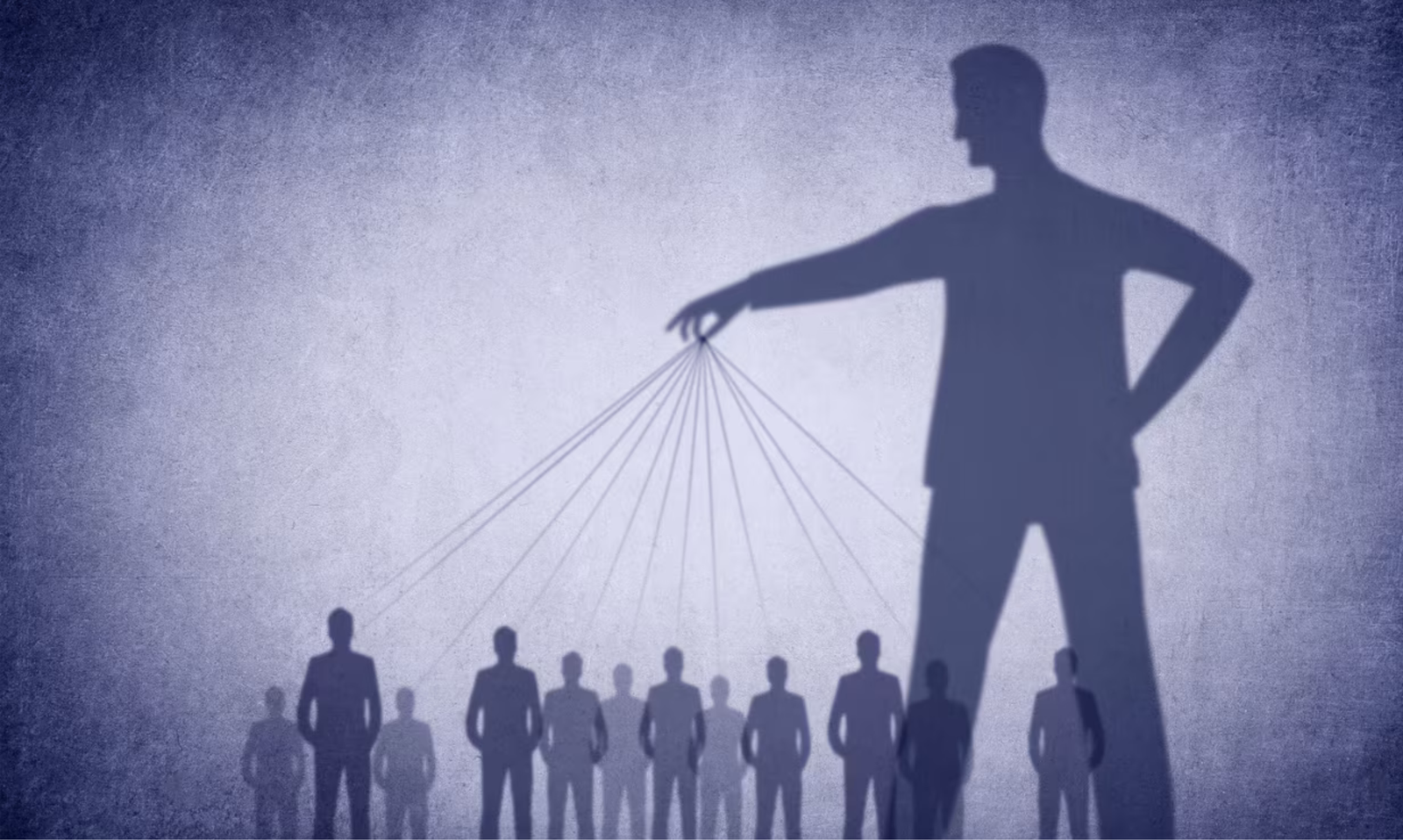
To advance its commercial interests, the tobacco industry employs a range of tactics, one of which is the so-called third-party technique[1].
This method is implemented through front groups, some of which operate openly – lobbying and business associations, where the membership of tobacco corporations is public (e.g., business associations). Another part is disguised as independent civil society organizations or citizen initiatives, professional groups, etc., which supposedly protect public interests but are, in fact, affiliated with the tobacco industry. This practice is known as astroturfing – simulating public support to promote commercial interests[2].
Ukrainian Law No. 2899-IV prohibits any form of financial or other support from the tobacco industry or related organizations to events, activities, individuals, or groups, including political parties, politicians, public figures, athletes, sports teams, artists, artistic groups, or educational institutions of all forms of ownership[3]. However, tobacco companies violate the law to serve their commercial interests by providing charitable contributions to nonprofit organizations, think tanks, and foundations that, in turn, attempt to influence public opinion, policymakers, and government officials[4].
The situation regarding the regulation of nicotine pouches in Ukraine is a clear example of the third-party technique.
Shortly after these products appeared, the tobacco industry began actively promoting their legalization and opposing bans supported by the Ministry of Health of Ukraine[5], using influence groups.
These include:
Business Associations: American Chamber of Commerce[6], Union of Ukrainian Entrepreneurs[7], Association “Ukrtyutyun”[8], European Business Association – sending identical letters to the Health Committee arguing for the regulation of nicotine pouches and participating in public discussions on the issue[9].
Pseudo-expert Civil Society Organizations:
Some organizations declare themselves as expert or socially beneficial, but systematically advocate positions favorable to the tobacco industry.
The World Health Organization (WHO) warns that tobacco companies illegitimately appropriate harm reduction concepts for public health while mass-marketing harmful products like heated tobacco products, e-cigarettes, and nicotine pouches. Genuine harm reduction programs involve health-sector actors achieving public health goals through scientifically justified strategies and interventions under strict monitoring[24].
Among the organisation’s partners are the M. S. Baksheev Foundation, which received $12,000 from Philip Morris International in 2023[25], and the All-Ukrainian Respiratory Club, headed by Yevhen Symonets, who systematically broadcasts messages that reflect the commercial interests of the tobacco industry and contradict the WHO’s approaches to overcoming tobacco and nicotine addiction[26][27].
Among involved “experts” are Yevhen Symonets, Olha Sribna, Serhii Baksheev, Vadym Zhezhera (promoting nicotine as a “less harmful alternative” to smoking)[28], and Viktor Komarenko, a military psychologist, who publicly claims nicotine pouches are a “safer alternative” for soldiers and for stimulating the nervous system in challenging conditions[29]. These positions collectively echo tobacco industry narratives and contradict evidence-based public health policy.
In December 2025, Preventive Hub published an open letter to the Health Committee calling for “regulation” of the nicotine pouch market, proposing a maximum nicotine level of 16.6 mg per pouch – a position significantly at odds with WHO and Ministry of Health recommendations, which support banning nicotine pouches[30]. While advertising restrictions were mentioned, flavoring – a key marketing tool targeting youth – was completely ignored.
WHO emphasizes that nicotine is a dangerous drug that is addictive and encourages the continued use of tobacco and nicotine products[31]. Nicotine is particularly dangerous for the health of children and adolescents. Nicotine use has significant risks for the cardiovascular and nervous systems of the human body.
Nicotine dependence is classified as a behavioral and mental disorder under the International Classification of Diseases, 11th Revision (ICD-11), code 6C4A[32].
According to the European Union’s REACH Regulation, nicotine is classified as highly toxic if it enters the body through the mouth, skin, or respiratory tract and may cause death[33].
WHO recommends a precautionary approach to nicotine pouches, including prohibition or strict regulation, to prevent creating new markets and ensure high levels of health protection[34].
Contrary to Article 5.3 of the WHO FCTC and Article 4 of Ukrainian Law No. 2899-IV, which require the protection of public health policies from the commercial and other vested interests of the tobacco industry, the State Service of Ukraine for Food Safety and Consumer Protection has become a platform for promoting decisions that benefit the tobacco industry: in January 2025, it organised an expert discussion[35] where the key ‘public’ speakers were individuals with business ties to the tobacco industry[36].
The head, Serhii Tkachuk, expressed support for regulating nicotine pouches and subsequently sent a letter to the Health Committee advocating a nicotine limit of 20 mg per pouch – aligning with the tobacco industry’s position[37].
Representatives of tobacco industry front groups were involved in the meeting:
Through these interactions, the tobacco industry attempts to influence legislation via front organizations, and cooperation between the State Consumer Service and these groups violates international norms and national law.
Article 5.3 of the WHO FCTC states:
“In setting and implementing their public health policies with respect to tobacco control, Parties shall act to protect these policies from commercial and other vested interests of the tobacco industry in accordance with national law”[44].
Law of Ukraine No. 2899-IV emphasizes the priority of public health policy over the financial, fiscal, and corporate interests of business entities whose activities are related to the tobacco industry[45].
Since 2012, Ukrainian law prohibits smoking hookahs, e-cigarettes, and tobacco products indoors at restaurants[46].
At the time, the initiative “Rights of Smokers”, coordinated by Yurii Paliichuk[47], actively opposed the ban. After the law was passed, so-called ‘activists’ publicly announced their intention to challenge the ban on smoking in restaurants in court[48]. However, both the initiative itself and its coordinator subsequently disappeared from the public sphere, indicating a lack of genuine interest in protecting the declared rights and solving the ‘problem.’
Since 2022, heated tobacco products have also been included in public smoking bans[49]. In addition, the provision of hookahs in restaurants promotes the sale of tobacco products, as confirmed by the Supreme Court of Ukraine (SCU), and therefore hookahs are subject to an absolute ban in restaurants, regardless of their composition[50].
A smoke-free and nicotine-free environment in public places has long been a social norm and a tool for protecting the health of the population from the harm caused by tobacco smoke.
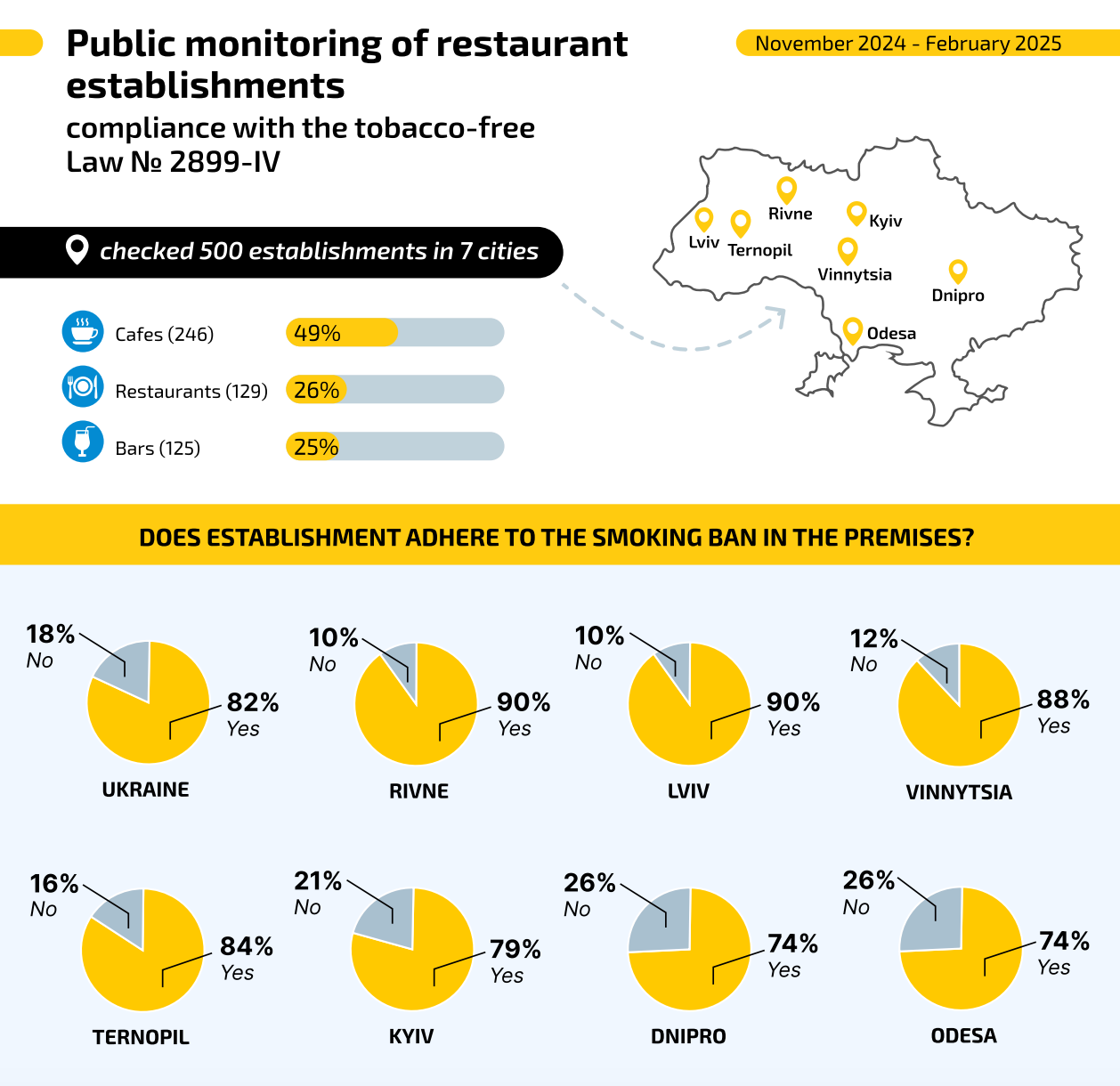
According to public monitoring data, in 2025, the vast majority (82%) of establishments in Ukraine complied with the ban on the smoking of all tobacco and nicotine products indoors[51].
According to a 2022 survey, 86% of Ukrainians aged 18 and older support an increase in the number of smoke-free public places[52].
Despite this, attempts to bring smoking back to restaurants are systematically recorded in Ukraine – both through legislative initiatives by individual MPs (in particular, M. Zablotskyi[53][54]) and through the activities of organised front groups.
One such example is the Ukrainian Hookah Association (chairman of the board Dmytro Dmytruk[55]), an organisation that positions itself as an association of restaurant owners who provide hookah services in their establishments, which has been prohibited in Ukraine since 16 December 2012. The association’s activities are aimed at restoring smoking in restaurants and promoting its own commercial interests, which consist of selling tobacco products and encouraging their consumption.
In 2022, amendments No. 20 (I. Fris and O. Sanchenko) and No. 21 (D. Natalukha) were made to draft law No. 5616 ‘On the Protection of Geographical Indications for Agricultural Products,’[56] which provide for the resumption of smoking indoors[57]. Such unlawful actions were probably deliberately committed to conceal the tobacco amendment from the public and mislead parliamentarians from other committees.
The Ukrainian Hookah Association supported these actions, as evidenced by Dmytro Dmytruk’s comments under O. Sanchenko’s Facebook post[58].
In 2025, the Ukrainian Hookah Association openly stated that it was promoting a bill to allow smoking in restaurants again[59].
In addition to lobbying for the relaxation of legislation, the association is taking actions aimed at undermining the capacity of state control bodies. In particular, it sent complaints to MPs about the allegedly ‘unlawful actions and inaction’ of the State Food and Consumer Service, accusing its territorial bodies of responding inadequately to requests for inspections[60]. Such actions are tantamount to pressure on regulatory bodies and undermine the state’s ability to provide control mechanisms.
At the same time, scientific data clearly shows the harm of hookah smoking both to smokers themselves and to those around them, as hookah smoke contains high concentrations of toxic substances and carcinogens[61]. The World Health Organization emphasises that one hour of hookah smoking can be equivalent to smoking 100 cigarettes in terms of smoke exposure[62]. During a hookah session, a smoker takes about 200 puffs, inhaling 30-40 times more smoke than when smoking cigarettes.
Prolonged inhalation of second-hand hookah smoke can cause dizziness, carbon monoxide poisoning, and subsequently asthma, ischaemic heart disease, stroke, and even cancer of the lungs, oesophagus, and stomach[63].
WHO surveys show that 2.6% of citizens in Ukraine are hookah smokers, with this percentage concentrated in the youngest reproductive age group of 18-29 years[64].
The tobacco industry and affiliated interest groups systematically promote their commercial interests, seeking to maximise their consumer base and normalise tobacco and nicotine use in society.
Such actions manipulate public opinion by presenting commercial interests as ‘public needs’ and undermine the state’s efforts in the field of public health.
In response, the state must act consistently and decisively, first and foremost protecting children and young people from becoming involved in nicotine use. To effectively shape and implement health policy, it is critical to ensure its independence from any interference by the tobacco industry and affiliated structures, strictly adhering to international standards, in particular Article 5.3 of the WHO FCTC.
It is important to increase the transparency of the legislative process and resolutely counteract astroturfing, as well as pseudo-medical or pseudo-public initiatives that mask commercial interests under the guise of ‘public benefit.’ Only systematic and consistent counteraction to such influences can truly protect public health and reduce the number of premature deaths from tobacco use, which in Ukraine reaches about 100,000 people annually[65].
[1] https://www.tobaccotactics.org/article/third-party-techniques/
[2] https://www.tobaccotactics.org/article/astroturfing/
[3] https://zakon.rada.gov.ua/laws/show/2899-15#n211
[4] https://zolota-kosa.center-life.org/
[5] https://www.rada.gov.ua/news/news_kom/267617.html
[6]https://drive.google.com/file/d/1JzPlAanzuFrHVY5gfaeypPR93WhVpy0d/view?usp=sharing
[7] https://drive.google.com/file/d/1uP-tT6iLPohXQIDuOrK31FMvtqvrMXY4/view?usp=sharing
[8] https://drive.google.com/file/d/1Zzuzp2rLhW5c_bX7pK4TZQk7tIUclE-n/view?usp=sharing
[9] https://drive.google.com/file/d/1dkU5U2aBb2KVW6Kp94M6SkWfM35k_o7Q/view?usp=sharing
[10] https://censor.net/biz/news/3591045/derjbyudjet-moje-nedootrymaty-ponad-23-milyardy-podatkiv
[11] https://drive.google.com/file/d/1dXUTOiS16gDIlbrxEmt9ToOSHIO9qfw_/view
[12] https://drive.google.com/file/d/1z3ApTECDaHddLlUseZ4U5H7ilRGoYw2v/view?usp=drive_link
[15] https://epravda.com.ua/columns/2024/01/23/709080/
[16] https://epravda.com.ua/columns/2024/11/13/721770/
[17] https://censor.net/biz/columns/3489224/aktsyzy_na_tsygarky
[18] https://www.rbc.ua/rus/news/dohodi-vid-tveniv-30-raziv-perevishchili-1733300244.html
[20] https://www.preventive-hub.com/
[21] https://youcontrol.com.ua/catalog/company_details/39910379/
[22] https://drive.google.com/file/d/1dXUTOiS16gDIlbrxEmt9ToOSHIO9qfw_/view
[23] https://med.oboz.ua/ukr/medical/yak-vimiryati-shkodu-vid-kurinnya.htm
[24] https://www.who.int/publications/m/item/who-position-on-tobacco-control-and-harm-reduction
[25] https://www.pmi.com/who-we-are/our-views-and-standards/standards/transparency/
[27] https://drive.google.com/file/d/1dXUTOiS16gDIlbrxEmt9ToOSHIO9qfw_/view
[30] https://www.preventive-hub.com/statti/likari-zaklikayut-vregulyuvati-nikotinovi-pauchi
[32] https://icd.who.int/browse/2025-01/mms/en
[33] https://echa.europa.eu/substance-information/-/substanceinfo/100.000.177
[36] https://drive.google.com/file/d/1dkU5U2aBb2KVW6Kp94M6SkWfM35k_o7Q/view?usp=sharing
[37] https://drive.google.com/file/d/1aK_yt6TBQhPeJM8_tv5naSsRdbFGV9TJ/view?usp=sharing
[41] https://youcontrol.com.ua/catalog/company_details/32984198/
[42] https://opendatabot.ua/c/43977984
[44] https://zakon.rada.gov.ua/laws/show/897_001#Text
[45] https://zakon.rada.gov.ua/laws/show/2899-15#n49
[46] https://zakon.rada.gov.ua/laws/show/2899-15#Text
[48] https://lb.ua/society/2012/05/24/152799_kurtsi_osparivat_antitabachniy.html
[49] https://zakon.rada.gov.ua/laws/show/1978-20/ed20231123#n297
[50] https://reyestr.court.gov.ua/Review/123946428#
[51] https://center-life.org/wp-content/uploads/2025/04/Ukrai-na_infohrafika-monitorynh-2025.pdf
[52] https://center-life.org/wp-content/uploads/2022/06/Omnibus-2022.pdf
[53] https://itd.rada.gov.ua/billinfo/Bills/Card/45357
[54] https://itd.rada.gov.ua/billinfo/Bills/Card/45087
[55] https://youcontrol.com.ua/catalog/company_details/44702000/
[56] https://itd.rada.gov.ua/billinfo/Bills/Card/26911
[57] https://itd.rada.gov.ua/billinfo/Bills/pubFile/1438805
[58] https://www.facebook.com/share/p/1G5br9h9jo/
[59] https://www.facebook.com/share/p/1ZK8tEfvSa/
[60] https://drive.google.com/file/d/1faW8j_I-NbC_JErPsvuPtAfWhnTSY5p7/view
[61] http://tobaccocontrol.org.ua/uploads/resource/file/54/58ea615304b2e.pdf
[62] https://applications.emro.who.int/dsaf/dsa746.pdf
[63] https://www.cdc.gov/tobacco/secondhand-smoke/health.html